

PIPEDA-Compliant Web Hosting for Canadian Businesses: A Compliance Checklist
What Is PIPEDA-Compliant Web Hosting for Canadian Businesses?
PIPEDA (Personal Information Protection and Electronic Documents Act) mandates that Canadian organizations safeguard personal data with accountability and transparency. Selecting PIPEDA compliant web hosting Canada means choosing providers who encrypt data, maintain audit trails, offer ca-central-1 region hosting, and hold SOC 2 Type II and ISO 27001 certifications. Techtweek Infotech, an AWS Advanced Consulting Partner, has guided 200+ Canadian enterprises through compliance-first hosting migrations. This checklist ensures your hosting meets federal and Quebec Law 25 standards.
Step 1: Verify Data Residency and ca-central-1 Region Hosting
PIPEDA requires personal data to remain within Canada’s borders unless explicit consent is obtained. Confirm your hosting provider offers ca-central-1 (Canada Central region) infrastructure.
- Check provider roadmap: AWS, Azure, and Linode all operate ca-central-1 zones. Avoid multi-region defaults that route data through US or EU datacenters.
- Request residency attestation: Ask your provider for a signed data residency declaration confirming backup and disaster-recovery locations.
- Review SLA maps: Verify replication endpoints stay within Canadian borders; Quebec Law 25 tightens this requirement further.
- Test failover paths: Simulate outages to confirm backup datacenters remain in ca-central-1, not US-east-1.
Step 2: Audit SOC 2 Type II and ISO 27001 Certifications
PIPEDA compliance relies on third-party assurance. Demand current certifications from your web hosting provider.
- SOC 2 Type II: Confirms controls over security, availability, processing integrity, confidentiality, and privacy across a minimum 6-month audit period. Request the attestation report (non-confidential sections).
- ISO 27001: Demonstrates information security management systems (ISMS) covering access control, encryption, incident response, and employee training—all PIPEDA essentials.
- PCI DSS (if handling payment cards): Level 1 or 2 certification proves payment data protection; critical if your hosting processes credit cards.
- Validation checklist: Confirm certifications are current and audited annually; expired certificates void compliance claims.
Step 3: Enforce Encryption and Access Controls
PIPEDA mandates encryption of personal data at rest and in transit. Your hosting infrastructure must enforce this automatically.
- In-transit encryption: TLS 1.2 or higher for all connections; verify HSTS headers and Certificate Pinning support.
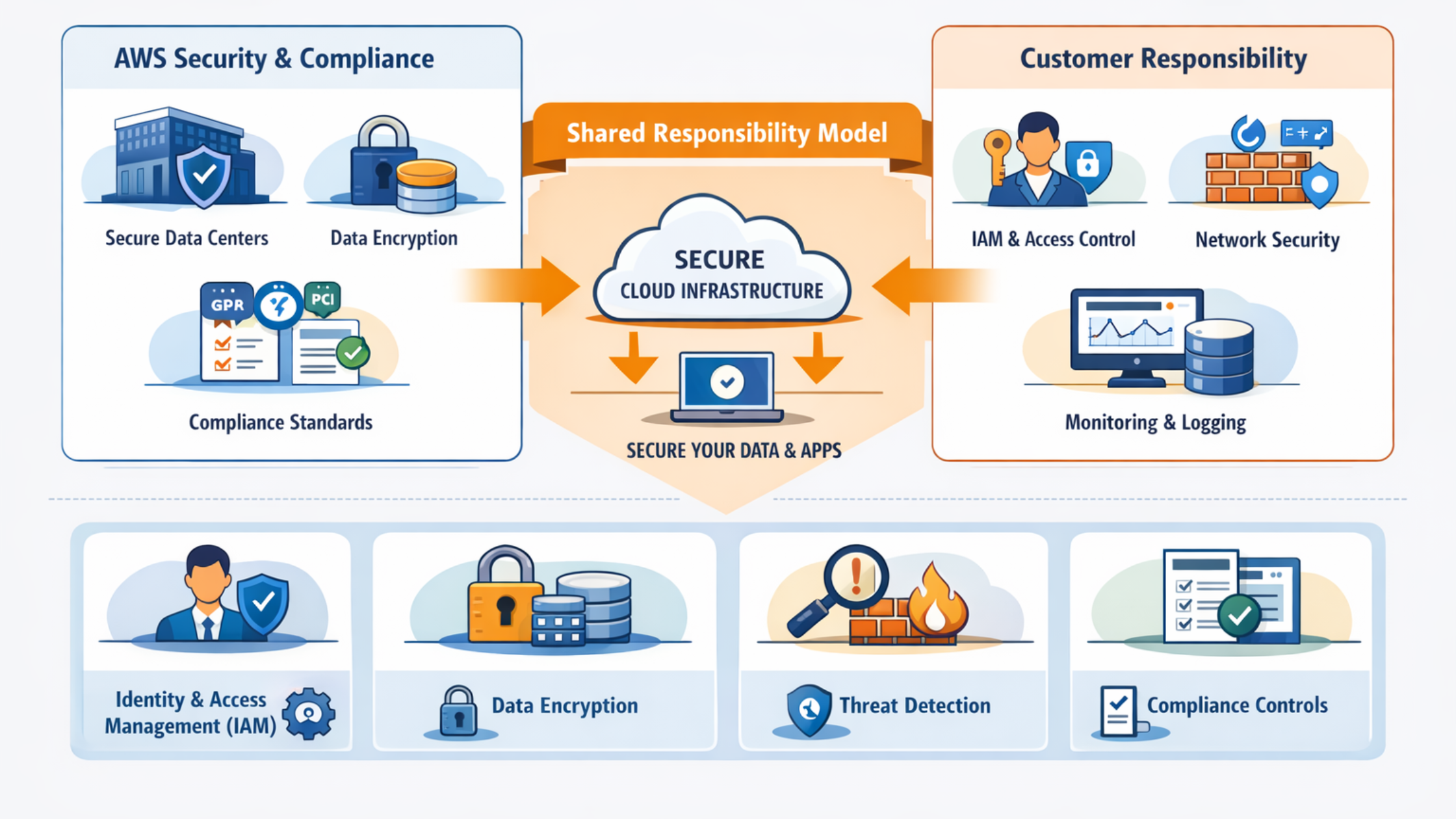
- At-rest encryption: AES-256 for databases and file storage; confirm key management is provider-controlled or customer-managed via AWS KMS or Azure Key Vault.
- API gateways: Web Application Firewalls (WAF) integrated with OWASP Top 10 rules; AWS WAF on ca-central-1 endpoints blocks unauthorized data access.
- Encryption key rotation: Enforce 90-day key rotation policies and maintain offline key backups in Canada.
Step 4: Establish Audit Logging and Incident Response Protocols
PIPEDA requires organizations to document data handling and respond to breaches within 30 days (or sooner under Quebec Law 25’s 72-hour rule for certain sectors). Your hosting provider must enable this visibility.
- CloudTrail/Activity Logs: Enable provider-level audit logging for all API calls, database queries, and user access. Store logs in ca-central-1 S3 or equivalent.
- 24/7 monitoring: Techtweek’s follow-the-sun security ops team monitors Canadian client infrastructure continuously, detecting anomalies in real-time.
- Incident response SLA: Confirm your provider commits to breach notification within 24 hours and forensic investigation support.
- Log retention: Maintain audit logs for minimum 2 years; Quebec Law 25 may extend this to 3 years for certain sectors.
Step 5: Validate Backup and Disaster Recovery in Canadian Infrastructure
Data loss violates PIPEDA’s accountability principle. Backup procedures must replicate to ca-central-1 secondary sites.
- RTO and RPO targets: Request Recovery Time Objective (RTO ≤ 4 hours) and Recovery Point Objective (RPO ≤ 1 hour) guarantees in writing.
- Backup encryption: Confirm backups are encrypted and stored in ca-central-1 or compliant Canadian regions only.
- Restore testing: Conduct quarterly disaster-recovery drills; your provider should participate and certify success.
- Geographic redundancy: Use AWS Backup cross-region replication within Canada only (ca-central-1 to ca-west-1 when available).
Step 6: Review Data Processing Agreements (DPA) and Privacy Policies
PIPEDA obligates you to sign a Data Processing Agreement with any third-party hosting provider. This legal contract clarifies roles and liabilities.
- Subprocessor transparency: Require your provider to list all subprocessors (CDN, backup, analytics vendors) and confirm they are PIPEDA-aware.
- Right to audit: DPA must grant you the right to audit the provider’s ca-central-1 facilities annually; Techtweek coordinates these assessments for clients.
- Data deletion clause: Specify procedures for secure deletion of personal data when contracts end; include cryptographic erasure or physical destruction in Canada.
- Cross-border transfers: If any data flows outside Canada, obtain explicit customer consent and document it in your privacy policy.
Step 7: Implement Employee Training and Access Control Policies
PIPEDA holds your organization accountable for employee conduct. Your hosting provider should enforce strict access controls.
- Role-based access control (RBAC): Confirm only authorized staff can access databases and server configurations; use principle of least privilege.
- Multi-factor authentication (MFA): Enforce MFA for all control panel and SSH access; mandatory for ca-central-1 infrastructure.
- Provider staff training: Ask for evidence of annual PIPEDA and cybersecurity training for all personnel with access to customer data.
- Incident response drills: Request participation in simulated breach scenarios to validate your organization’s response procedures.
Step 8: Monitor and Update Compliance Status Quarterly
PIPEDA compliance is not a one-time checklist; regulations and provider certifications evolve. Establish a quarterly review cadence.
- Certification renewal tracking: Set calendar reminders to verify SOC 2 and ISO 27001 refresh dates; expired certs create liability gaps.
- Threat landscape updates: Subscribe to CCCS (Canadian Centre for Cyber Security) advisories and ISED vulnerability notices; adjust hosting security posture accordingly.
- Quebec Law 25 readiness: As Quebec’s data protection law strengthens (effective 2025), verify your provider’s roadmap for enhanced consent, transparency, and breach-notification features.
- Techtweek quarterly reviews: Our AWS Advanced Partner team conducts compliance health checks for Canadian clients, identifying gaps and recommending ca-central-1 optimization strategies.
Conclusion: PIPEDA-compliant web hosting in Canada requires deliberate vendor selection, continuous monitoring, and legal alignment. Use this checklist to audit your current provider or evaluate new options in ca-central-1 regions. Techtweek Infotech’s 24/7 follow-the-sun security ops and AWS expertise ensure your hosting meets federal standards and Quebec Law 25 readiness. Contact our Canada-based team to schedule a compliance assessment.
Frequently Asked Questions
What is the difference between PIPEDA and Quebec Law 25?
PIPEDA is federal legislation covering most Canadian industries. Quebec Law 25 is provincial law strengthening privacy protections for Quebec residents—including stricter breach notification (72-hour window), consent requirements, and CCPA-like rights. Your hosting must comply with both if you serve Quebec customers.
Can I use US-based hosting if my backup is in Canada?
No. PIPEDA requires active personal data to reside in Canada. US-based servers violate the law unless you obtain explicit customer consent for cross-border transfers. Always use ca-central-1 primary infrastructure; backups in ca-central-1 alone are insufficient for compliance.
How often should I audit my hosting provider’s PIPEDA compliance?
Annually at minimum, and quarterly if handling sensitive data. Review SOC 2 and ISO 27001 certs, request audit reports, validate ca-central-1 data residency, and test backup/disaster-recovery procedures. Techtweek conducts compliance reviews for Canadian AWS clients every quarter.
What happens if my hosting provider suffers a breach?
You remain liable to your customers under PIPEDA. Your DPA must require the provider to notify you within 24 hours and support forensic investigation. CCCS guidelines recommend reporting to Privacy Commissioner of Canada within 30 days (or 72 hours for Quebec Law 25 sectors). Ensure your hosting SLA includes breach response guarantees.
Is AWS ca-central-1 enough for PIPEDA compliance?
AWS ca-central-1 infrastructure is a foundation, but not sufficient alone. You must layer SOC 2 Type II, ISO 27001, encryption, audit logging, DPA, and employee training. Techtweek’s AWS Advanced Partner team integrates these controls to ensure end-to-end PIPEDA alignment for Canadian enterprises.
Read the full guide: Web & Domain Hosting in Canada.