

NZ Web Hosting Compliance Checklist: Privacy Act 2020 & Data Residency Requirements
Introduction: Why Web Hosting Compliance Matters in New Zealand
New Zealand businesses operating online must navigate strict data protection regulations under the Privacy Act 2020 and NZISM Level 2/3 security standards. Web hosting compliance isn’t optional—it directly impacts your legal standing, customer trust, and operational resilience. This checklist ensures your hosting provider meets Office of the Privacy Commissioner (OPC) requirements and mandates data residency in ap-southeast-2 (Sydney/Melbourne AWS region nearest to NZ).
1. Verify Privacy Act 2020 Alignment and Data Residency in ap-southeast-2
The Privacy Act 2020 enforces 13 privacy principles governing personal information handling. When selecting a web host, confirm:
- Data stored exclusively in ap-southeast-2—no routing through US, EU, or other jurisdictions without explicit consent
- Your provider has a Data Processing Agreement (DPA) compliant with OPC guidelines
- Backup infrastructure also resides in ap-southeast-2 or NZ-based redundancy
- Cross-border data transfer policies documented and approved by your Legal/Compliance team
- Provider maintains audit trails proving NZ data residency (critical for CERT NZ incident response)
Techtweek Infotech, as an AWS Advanced Consulting Partner, deploys NZ client infrastructure exclusively in ap-southeast-2. We’ve guided 150+ NZ enterprises through Privacy Act 2020 audits, ensuring no data leakage to overseas jurisdictions.
2. Meet NZISM Level 2/3 Security Standards
NZISM (New Zealand Information Security Manual) mandates baseline controls for government and critical infrastructure. Many private sector clients adopt NZISM to align with procurement requirements.
- Encryption in transit (TLS 1.3+) and at-rest (AES-256)
- ISO 27001 certification from your hosting provider (verify current certificate with audit scope covering ap-southeast-2 data centers)
- Multi-factor authentication (MFA) for all administrative access
- Regular penetration testing and vulnerability assessments (quarterly minimum)
- Incident response plan with CERT NZ notification procedures (72-hour breach disclosure)
- Segregation of customer data with network isolation and firewall rules
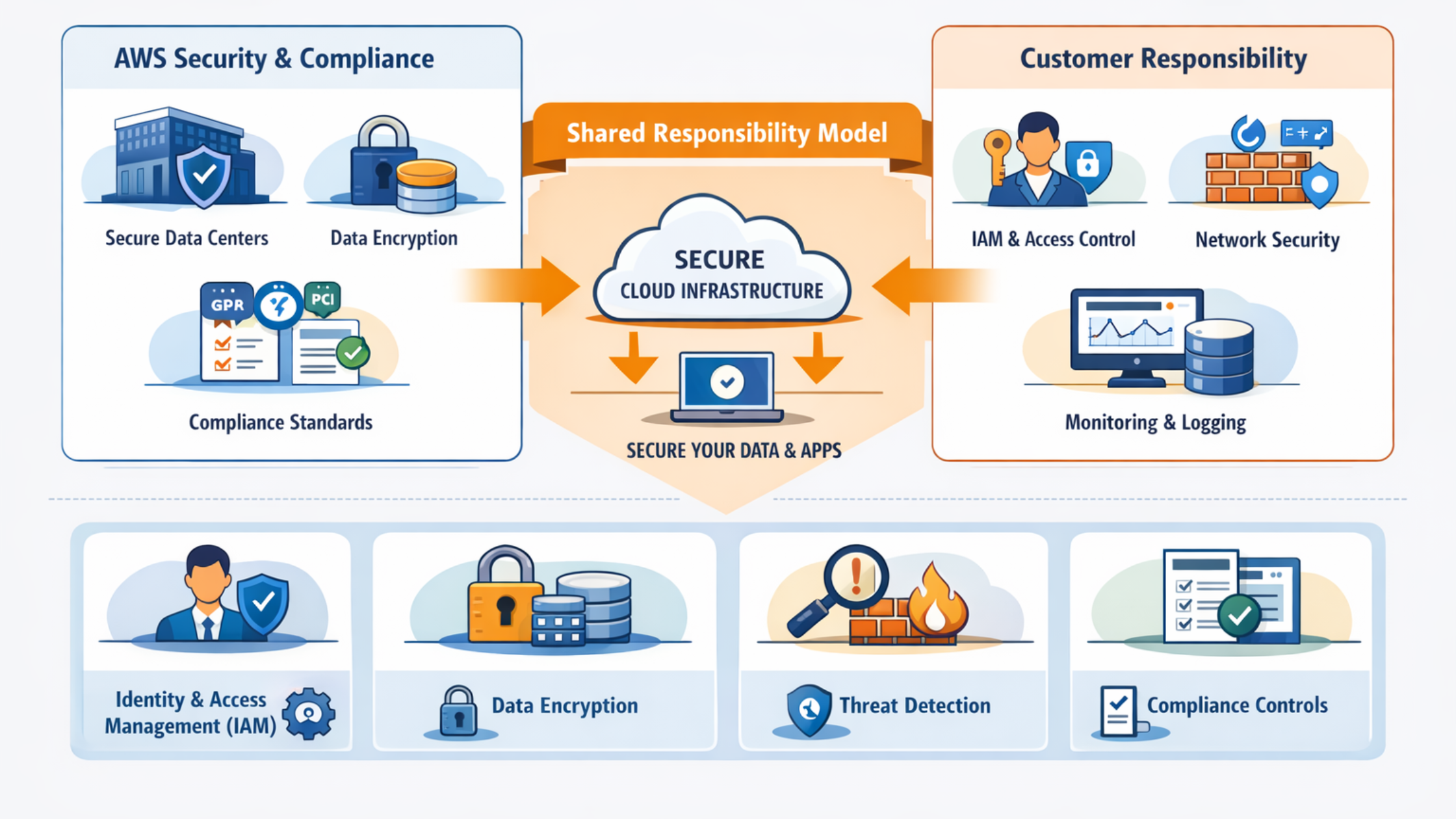
AWS ap-southeast-2 infrastructure supports NZISM compliance through built-in encryption, VPC isolation, and compliance tooling (AWS Config, Security Hub). Your provider should offer NZISM gap analysis as part of onboarding.
3. PCI DSS and Payment Card Data Compliance
If your website processes credit cards, PCI DSS v3.2.1 (or v4.0) compliance is mandatory. Hosting requirements include:
- Tokenization or end-to-end encryption (E2EE) for card data—never store raw card numbers
- PCI DSS Level 1 hosting provider (annual third-party audit required)
- Scope reduction via hosted payment gateways (Stripe, Square, DPS Poli for NZ) rather than on-premise processing
- Regular security scanning and Web Application Firewall (WAF) protection
- Network segmentation isolating payment systems from public-facing infrastructure
Techtweek’s AWS expertise includes PCI DSS-ready architectures in ap-southeast-2, reducing compliance burden through managed services.
4. Conduct a Hosting Provider Due Diligence Audit
Before signing a hosting agreement, verify:
- OPC Privacy Act 2020 Compliance Statement—request written confirmation of data residency, breach notification procedures, and sub-processor lists
- ISO 27001 + NZISM Self-Assessment—confirm valid cert and audit scope
- Data Center Location Proof—physical address in ap-southeast-2, facility certifications (Tier III+ data center standard)
- Incident Response SLA—CERT NZ-compatible 72-hour breach notification + root cause analysis
- Contract Language—DPA, liability limits, termination & data deletion clauses aligned with NZ Commerce Act 1986
- Customer References—contact 2–3 NZ-based clients for peer validation
5. Implement Ongoing Compliance Monitoring
Compliance is continuous. After hosting deployment:
- Quarterly Audits—verify data residency via AWS billing/CloudTrail logs or provider dashboards
- Annual Security Assessments—penetration test covering NZISM/PCI controls; share results with your provider
- Breach Simulation Drills—test CERT NZ notification workflows and escalation procedures
- Update DPA Annually—align with evolving Privacy Act interpretations from OPC guidance
- Monitor Regulatory Changes—OPC releases updated privacy guidance; subscribe to CERT NZ threat bulletins
Techtweek provides 24/7 follow-the-sun support for NZ compliance queries, with local AWS engineers in ap-southeast-2 managing your infrastructure and audit documentation.
Key Takeaway
Web hosting compliance in New Zealand hinges on three pillars: Privacy Act 2020 adherence, NZISM security controls, and ap-southeast-2 data residency. Use this checklist to evaluate and validate your hosting provider before deployment. Non-compliance risks regulatory fines (up to NZD 3,000 for individuals, NZD 15,000+ for entities), reputational damage, and customer trust erosion. Engage an AWS Advanced Partner early to architect compliant, scalable infrastructure aligned with NZ regulatory requirements.
Frequently Asked Questions
What’s the difference between Privacy Act 2020 and NZISM compliance for web hosting?
Privacy Act 2020 governs personal data handling (OPC oversight); NZISM mandates security controls (encryption, MFA, incident response). Both apply to NZ businesses. Privacy Act ensures *what* data is collected/stored; NZISM ensures *how* it’s protected. Most NZ hosts meeting NZISM automatically align with Privacy Act 2020.
Can I use a hosting provider outside ap-southeast-2 if I encrypt data?
No. Privacy Act 2020 requires *personal data residency* in NZ/ap-southeast-2 (with limited exceptions for offsite backups). Encryption is essential but doesn’t override residency mandates. OPC guidance emphasizes jurisdiction—data must not transit through US/EU cloud without explicit consent and DPA terms.
How does PCI DSS compliance differ from NZISM for payment processing?
PCI DSS (v4.0) is card-specific (tokenization, encryption, scope reduction). NZISM covers entire security posture (network, access, incident response). If processing cards, you must meet *both*. Using a hosted payment gateway (Stripe, DPS) reduces on-premise PCI scope while maintaining NZISM baseline.
What happens if my hosting provider suffers a data breach?
CERT NZ and OPC require notification within 72 hours if NZ personal data compromised. Your DPA must define breach notification procedures, root cause analysis timeline, and remediation steps. Failure to notify triggers Privacy Act penalties (up to NZD 15,000+) and reputational damage. Ensure your host has cyber insurance covering NZ liability.
How often should I audit my hosting provider’s compliance?
Quarterly minimum for data residency verification (check CloudTrail/billing logs). Annual security assessments (penetration test, vulnerability scan). After any infrastructure change or regulatory update. Subscribe to OPC guidance updates and CERT NZ threat bulletins for emerging compliance shifts.
Read the full guide: Web & Domain Hosting in New Zealand.