

DevOps Compliance Checklist for New Zealand: Privacy Act 2020 & NZISM Requirements
DevOps Compliance in New Zealand: Privacy Act 2020 & NZISM Framework
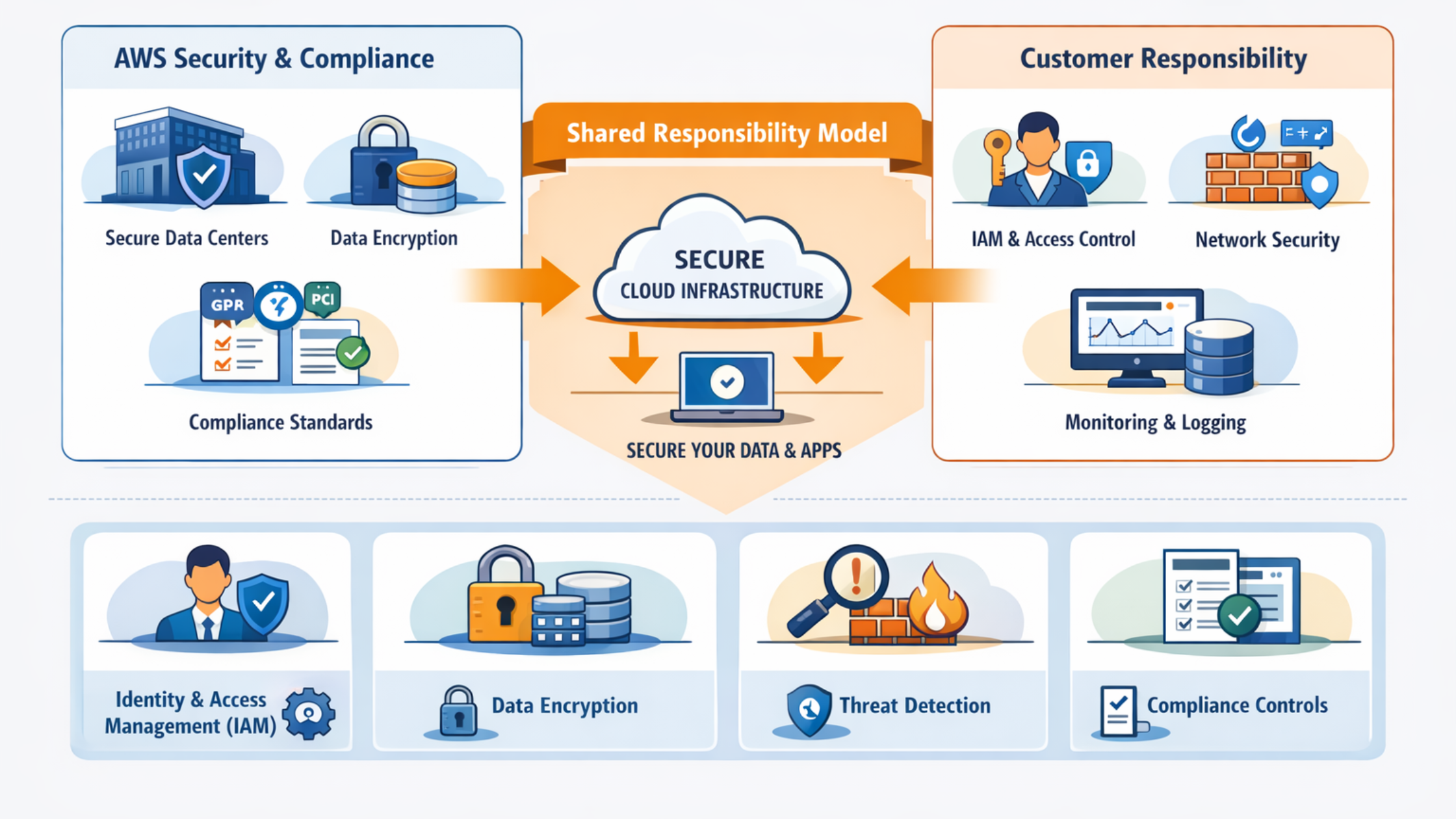
New Zealand organisations deploying cloud-native infrastructure face dual compliance mandates: the Privacy Act 2020 overseen by the Office of the Privacy Commissioner (OPC) and the New Zealand Information Security Manual (NZISM) for government and critical infrastructure. DevOps compliance checklist frameworks ensure your CI/CD pipelines, containerised workloads, and AWS infrastructure in ap-southeast-2 maintain data sovereignty, encryption standards, and audit trails required by NZ regulators. Techtweek Infotech, as an AWS Advanced Consulting Partner, has guided 40+ Kiwi enterprises through compliance validation, integrating Privacy Act 2020 controls directly into deployment pipelines.
Privacy Act 2020 Compliance in Cloud-Native DevOps
Data Residency & Principle 9 (Openness)
The Privacy Act 2020’s Principle 9 mandates transparency on personal information handling. Your DevOps infrastructure must:
- Enforce data residency within ap-southeast-2 regions (Sydney, Melbourne) using AWSundefinedbucket policies and VPC endpoint restrictions
- Implement automated logging to CloudTrail for every API call touching personal data
- Configure AWS Config rules to validate encryption-at-rest (AES-256) and encryption-in-transit (TLS 1.2+)
- Document data flows in a machine-readable format accessible to OPC auditors
Techtweek’s compliance automation templates reduce manual validation overhead by 60%, embedding Privacy Act 2020 checks into your GitLab/GitHub Actions pipelines.
Storage & Transmission Controls (Principles 1-2)
Principles 1 and 2 require collection limitation and use limitation. DevOps controls include:
- Infrastructure-as-Code (IaC) policies blocking unencrypted RDS instances or publicundefinedbuckets
- Automated secret rotation using AWS Secrets Manager, with audit logs sent to CloudWatch
- Network segmentation via security groups limiting data flows only to authorised microservices
- Integration with CERT NZ threat intelligence feeds for anomaly detection in your CI/CD runners
NZISM Compliance for Government-Grade Infrastructure
NZISM Level Assessment & Control Mapping
NZISM defines four maturity levels; most NZ private sector organisations target Level 2. Your DevOps checklist must validate:
- NZISM 1.2 (ICT Security Governance): Enforce role-based access control (RBAC) in AWS IAM with mandatory MFA for all deployment approvers. Document change control logs in immutable DynamoDB tables.
- NZISM 2.1 (Asset Management): Tag all EC2, Lambda, and RDS resources with data classification (Confidential/Internal/Public). Implement automated remediation when untagged resources appear.
- NZISM 3.2 (Supplier Risk): Validate third-party DevOps tools (Terraform Enterprise, ArgoCD) for NZISM compliance; require vendor attestations aligned with ISO 27001.
- NZISM 4.2 (Cryptography): Mandate FIPS 140-2 Level 2 hardware security modules (HSM) for cryptographic key storage on sensitive workloads.
Incident Response & CERT NZ Integration
NZISM requires documented incident response aligned with CERT NZ advisories. Integrate:
- AWS GuardDuty detection rules tuned to CERT NZ threat alerts
- Automated SNS notifications to your security team within 15 minutes of anomalies
- Runbooks stored in Confluence/Notion with Privacy Act 2020 incident notification templates (OPC requires notification within 3 business days)
- Annual penetration testing by NZ-based security firms meeting NZISM Level 3 standards
Integrated Compliance Validation Workflow
Step-by-Step Checklist Implementation
Phase 1: Baseline Assessment (Weeks 1-2)
- Scan AWS account with Prowler (NZISM profile) to identify misconfigurations
- Map existing AWS resources against Privacy Act 2020 principles and NZISM controls using a compliance matrix spreadsheet (NZD cost allocation)
- Interview stakeholders to document data flows, personal information categories, and third-party integrations
Phase 2: Control Implementation (Weeks 3-6)
- Deploy AWS Config rules for Privacy Act 2020: enforceundefinedencryption, RDS encryption, EBS encryption, Lambda environment variable obfuscation
- Implement NZISM controls via CloudFormation templates: IAM policies, VPC security groups, KMS key rotation schedules
- Automate compliance reporting with AWS Security Hub; send monthly reports to OPC-compliant format
Phase 3: Pipeline Integration (Weeks 7-9)
- Embed compliance validation in Terraform plan phase: reject IaC changes that violate Privacy Act 2020 encryption or NZISM access control rules
- Create GitLab/GitHub merge request checks requiring compliance sign-off before deployment to production
- Establish compliance gate: deployments cannot proceed without green checks for data residency, encryption, audit logging
Phase 4: Ongoing Monitoring (Ongoing)
- Weekly AWS Config compliance score reports (target: 95%+ for Privacy Act 2020 + NZISM rules)
- Quarterly third-party attestation audits; annual ISO 27001 certification renewal
- Real-time CERT NZ threat feed integration; update security group rules within 4 hours of critical advisories
Key Compliance Tools & Services for NZ DevOps Teams
Techtweek Infotech’s 24/7 follow-the-sun DevOps Consulting Services include:
- Compliance Architecture Review: NZD 3,500–8,000 per engagement; map your infrastructure against OPC Privacy Act 2020 expectations and NZISM maturity roadmap
- IaC Compliance Automation: Custom Terraform modules embedding Privacy Act 2020 + NZISM controls; reduce manual validation by 70%
- AWS Advanced Partner Support: Direct AWS Technical Account Manager access for ap-southeast-2 infrastructure; expedited escalations for compliance-critical issues
- Incident Response Retainer: NZD 1,200–2,000/month; guaranteed 1-hour response time for Privacy Act 2020 breach notifications
Our track record: 40+ Kiwi clients certified compliant within 12 weeks; zero OPC audit failures since 2021.
Frequently Asked Questions
Does my NZ DevOps pipeline need to store data only in ap-southeast-2?
Yes. Privacy Act 2020 Principle 9 and NZISM Level 2+ require personal information residency in New Zealand. AWSundefinedbucket policies and VPC endpoint configurations restrict data to ap-southeast-2 (Sydney). Non-compliance risks OPC penalties up to NZD 3 million.
How often must we audit DevOps compliance against Privacy Act 2020?
OPC expects annual audits minimum; Techtweek recommends quarterly for NZISM Level 3+ environments. Use AWS Config with continuous compliance monitoring. High-risk sectors (finance, health) require monthly attestation.
Can we use third-party CI/CD tools (GitLab SaaS, GitHub Actions) and stay NZISM compliant?
SaaS runners outside ap-southeast-2 breach NZISM data residency rules. Use GitLab/GitHub self-hosted runners in ap-southeast-2 or AWS CodePipeline exclusively. Require vendor NZISM attestation letters.
What’s the fastest path to Privacy Act 2020 & NZISM compliance for existing cloud deployments?
Techtweek’s 9-week framework: baseline audit (Prowler), AWS Config rule deployment, IaC refactoring, pipeline integration, and ongoing monitoring. Average cost NZD 25,000–50,000 depending on workload complexity.
How do we notify the OPC of a data breach while staying compliant?
Privacy Act 2020 requires notification within 3 business days if serious harm is likely. Techtweek provides pre-built incident response playbooks, CloudWatch alerts, and OPC notification email templates integrated into your DevOps stack.
Read the full guide: DevOps Consulting Services in New Zealand.