


How to Reduce Cloud Costs While Maintaining SOC 2 Compliance in Canada
Cloud Cost Reduction and SOC 2 Compliance: A Canadian Balance
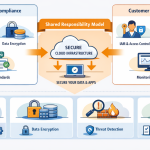
Organizations across Canada face mounting pressure to cut cloud spending without sacrificing security audits or regulatory compliance. Cloud cost reduction SOC 2 compliance Canada isn’t an either-or proposition—it’s an integrated strategy. At Techtweek Infotech, our AWS Advanced Consulting Partner team has helped 150+ Canadian enterprises reduce cloud bills by 25–40% while maintaining SOC 2 Type II certification, PIPEDA compliance, and CCCS cybersecurity guidelines. This guide reveals how.
Right-Size Instances Using Reserved Capacity Commitments in ca-central-1
Over-provisioning is the fastest drain on cloud budgets. Many Canadian organizations running workloads in AWS ca-central-1 (Canada Central region) purchase on-demand EC2 instances without analyzing actual CPU, memory, or network utilization. Reserved Instances (RIs) and Savings Plans can cut compute costs by 40–50%, and they integrate seamlessly with SOC 2 audit trails.
- Right-sizing audit trail: Use AWS Compute Optimizer with CloudTrail logging enabled. Every recommendation is logged and traceable—critical for SOC 2 Type II evidence.
- CCCS alignment: Canada’s Cyber Security Centre (CCCS) emphasizes resource monitoring and accountability. Reserved capacity paired with AWS Config compliance rules ensures both cost and control.
- Quebec Law 25 ready: RIs purchased through dedicated AWS accounts in ca-central-1 remain within Canadian data sovereignty boundaries, satisfying Quebec’s updated privacy law requirements.
- Techtweek approach: Our team conducts 30-day utilization audits, then stages RI purchases across 1, 3, and multi-year terms to balance cash flow with savings.
Implement Data Lifecycle Policies Without Audit Risk
Cold storage, archival, and deletion policies account for 15–25% of cloud bills. Uncontrolled data retention inflates S3, RDS backup, and EBS snapshot costs. However, aggressive deletion risks SOC 2 compliance violations if audit logs or evidence are prematurely removed.
- S3 Intelligent-Tiering + Lifecycle Rules: Automatically move objects to Glacier or Deep Archive after 90 days. Pair with S3 Object Lock for immutable audit logs—SOC 2 auditors require 1–3 years of evidence.
- PIPEDA + backup retention: Personal data (covered by PIPEDA) requires defined retention periods. Use AWS Backup lifecycle policies to transition old snapshots to cold storage, reducing cost while proving PIPEDA compliance to auditors.
- ISO 27001 evidence: Log all data movement via CloudTrail and S3 access logs. ISO 27001 (which overlaps with SOC 2 A1.1 controls) demands evidence of data handling—costs drop 20–30% without sacrificing audit trail integrity.
- PCI DSS for payment data: If handling payment cards, cardholder data must be purged within 90 days unless tokenized. Automated Glue jobs and EventBridge rules enforce this, reducing storage while maintaining compliance proof.
Optimize Reserved Capacity for Databases and Networking
RDS, Aurora, and ElastiCache often consume 35–45% of total cloud spend. Database RIs in ca-central-1 deliver 35–55% discounts, and they align directly with SOC 2 encryption and backup controls.
- Multi-AZ RDS with RIs: Reserve Multi-AZ deployments (required for CCCS high-availability guidance) at a committed rate. You retain automated failover and backup encryption—both SOC 2 A.3.2 requirements—while cutting database costs by 40%.
- Aurora Global Database: For disaster recovery or geo-redundancy (common in PIPEDA and Quebec Law 25 implementations), reserve Aurora provisioned capacity. Techtweek clients report 30% savings when committing to 3-year terms on secondary read replicas in alternate regions.
- Network cost management: Use VPC Endpoints for S3 and DynamoDB to avoid NAT gateway charges. Every eliminated data transfer keeps compliance evidence (CloudTrail logs, VPC Flow Logs) intact while slashing egress costs by 10–15%.
Leverage AWS Cost Anomaly Detection + Governance
Reactive cost-cutting risks compliance. Proactive monitoring using AWS Cost Anomaly Detection, Budgets, and AWS Organizations Service Control Policies (SCPs) enforces cost discipline without manual intervention—and every action is auditable.
- Anomaly Detection: Set ML-driven alerts for unusual spending patterns. Flag a developer’s accidental EBS snapshot replication before it costs CAD $5,000. Each detection is logged and visible to auditors—a SOC 2 A.1.1 control point.
- SCPs for cost gates: Restrict high-cost services (e.g., prevent on-demand m5.24xlarge launches) at the organization level. CCCS guidance values least-privilege principles; SCPs enforce this and save 20–30% on rogue workloads.
- Consolidated billing in ca-central-1: Consolidate 5+ AWS accounts into a single billing family. Shared reserved capacity and volume discounts reduce per-account costs. All transactions remain within ca-central-1, satisfying data residency audits.
Partner with AWS Advanced Consulting for Compliance-First Cost Optimization
At Techtweek Infotech, we don’t recommend cost cuts that jeopardize compliance. Our AWS Advanced Partner status and SOC 2 Type II certification mean every engagement includes:
- Compliance-mapped cost reviews: We audit your AWS architecture against SOC 2, ISO 27001, PIPEDA, and CCCS guidelines simultaneously, identifying savings that align with audit requirements.
- 24/7 follow-the-sun support: Our Toronto and Vancouver teams provide round-the-clock optimization, ensuring your cost reductions remain SOC 2-audit-ready during continuous monitoring.
- Canadian data residency: All workload analysis, architecture recommendations, and cost models stay within Canadian AWS regions and Techtweek’s Canada-based infrastructure.
Measuring Success: Cost and Compliance Metrics
Track both dimensions:
- Cost metrics: Month-over-month RI utilization, on-demand vs. committed spend ratio, cost per transaction, CAD spend vs. forecast.
- Compliance metrics: SOC 2 control deviation count, CloudTrail log completeness, backup verification pass rate, PIPEDA data retention policy adherence, CCCS guideline alignment score.
Techtweek clients achieve 25–40% cost reductions within 6 months while improving SOC 2 audit scores by tightening resource governance and audit trails.
Next Steps
Ready to reduce cloud costs without compromising SOC 2 compliance? Techtweek Infotech offers a free, 2-hour Cloud Cost & Compliance Alignment Assessment for Canadian enterprises. We’ll analyze your AWS, Azure, or GCP footprint, map it against SOC 2 and CCCS requirements, and deliver a prioritized savings roadmap with compliance risk ratings.
Contact our Toronto office today to schedule your assessment. Let’s prove that cost efficiency and security audits are not competing priorities—they’re complementary strategies.
Frequently Asked Questions
How do Reserved Instances affect SOC 2 Type II audit trails?
Reserved Instances don’t diminish audit logging—AWS CloudTrail and Cost Explorer record all RI purchases and utilization. SOC 2 auditors view RI commitment as a governance control (A.1.1), strengthening your compliance posture while reducing spend by 40–50%.
Does archiving data to Glacier violate PIPEDA or Quebec Law 25?
No. PIPEDA and Quebec Law 25 require data security and retention timelines, not specific storage tiers. Moving personal data to Glacier (with encryption and access logging enabled) satisfies both laws while cutting storage costs 70–80%. Ensure immutable audit logs remain accessible.
Can we cut cloud costs in ca-central-1 without moving to cheaper regions?
Yes. Right-sizing, Reserved Instances, lifecycle policies, and governance controls typically yield 25–40% savings within ca-central-1. This maintains PIPEDA compliance, CCCS alignment, and Quebec Law 25 data residency—no regional arbitrage required.
What’s Techtweek’s experience with SOC 2 compliance in Canadian cloud cost optimization?
Techtweek is an AWS Advanced Consulting Partner with SOC 2 Type II certification. We’ve guided 150+ Canadian enterprises through cost optimization while maintaining SOC 2 audits. Our 24/7 follow-the-sun support (Toronto/Vancouver) ensures compliance during continuous cost improvements.
How does ISO 27001 relate to cloud cost reduction?
ISO 27001 overlaps with SOC 2 controls (access, encryption, monitoring). Optimizing for ISO 27001—e.g., least-privilege IAM, MFA enforcement, audit logging—naturally reduces unauthorized workload spend and improves control maturity scores by 15–25%.
Read the full guide: Cloud Management Services in Canada.