

PCI DSS and ADHICS Server Security: What UAE Payment Processors Need to Know
PCI DSS and ADHICS Server Security for UAE Payment Processors
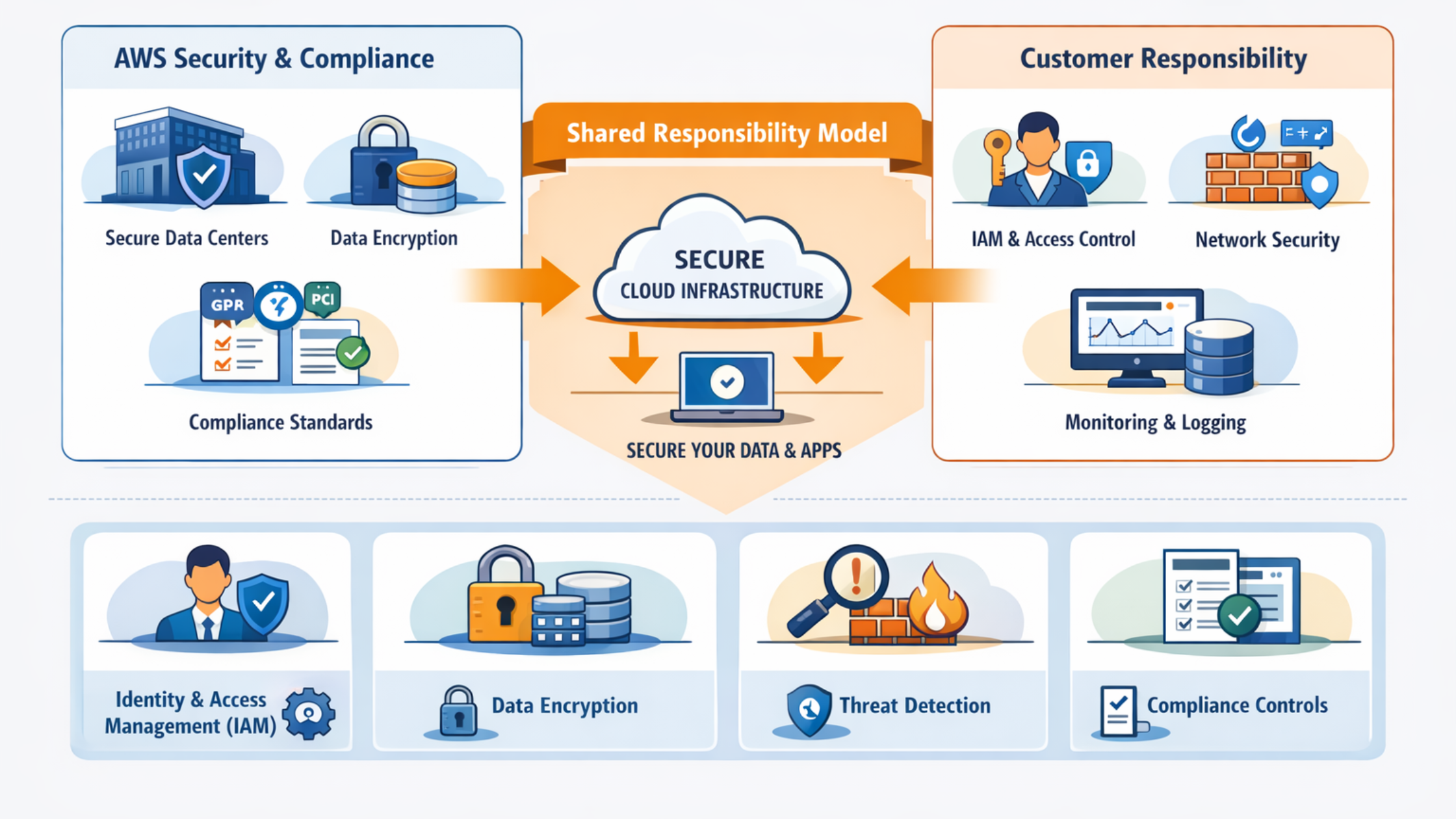
Payment processors across the United Arab Emirates operate under strict regulatory frameworks. PCI DSS ADHICS server security is no longer optional—it’s mandatory for any organization handling cardholder data. As an AWS Advanced Consulting Partner, Techtweek Infotech helps UAE payment processors align infrastructure with PCI DSS requirements, ADHICS guidelines, and TDRA oversight. This guide demystifies the compliance landscape and actionable server security strategies specific to Dubai, Abu Dhabi, and the broader UAE market.
Understanding PCI DSS and ADHICS in the UAE Context
The Payment Card Industry Data Security Standard (PCI DSS v3.2.1) is the global baseline for cardholder data protection. In the UAE, however, payment processors must also satisfy ADHICS (Abu Dhabi Health Insurance Council Security) principles where healthcare payments intersect, plus overlapping requirements from the Telecommunications and Digital Government Regulatory Authority (TDRA) and UAE Personal Data Protection Law (UAE PDPL).
ADHICS mandates that health-related payment servers maintain:
- Encrypted cardholder data at rest and in transit
- Role-based access controls (RBAC) with multi-factor authentication (MFA)
- Immutable audit logs retained for 7+ years
- Data residency within me-central-1 (AWS Middle East region)
Combining PCI DSS Level 1 compliance (for processors handling >6 million transactions/year) with ADHICS creates a layered security model. Techtweek’s 24/7 follow-the-sun operations team ensures your servers meet both standards simultaneously, eliminating audit gaps.
Cardholder Data Protection and Encryption Standards
PCI DSS requires encryption of cardholder data (CHD) in transit and at rest. In the UAE, this translates to:
- TLS 1.2+ for all network communications (API, web, database replication)
- AES-256 encryption at rest on me-central-1 servers, using AWS KMS or customer-managed keys
- PAN (Primary Account Number) tokenization to minimize sensitive data stored on your infrastructure
- HSM (Hardware Security Module) integration for key management in compliance with NESA/SIA standards
TDRA compliance in Dubai DESC (Dubai eGovernment Security Centre) frameworks mandates that encryption keys be segregated from encrypted data. Payment processors must never store encryption keys on the same server as CHD. AWS me-central-1 supports isolated key vaults and cryptographic separation, eliminating this risk.
Techtweek conducts quarterly encryption audits and penetration tests to verify that your server configuration maintains PCI DSS v3.2.1 Level 1 standards while meeting ADHICS data residency mandates.
Audit Trails, Logging, and Compliance Documentation
Both PCI DSS and ADHICS demand comprehensive, tamper-proof audit trails. Regulators including TDRA and Dubai DESC require evidence of:
- Every access to cardholder data (who, when, what action, source IP)
- Administrative changes to firewall rules, user accounts, or encryption keys
- Failed login attempts and privilege escalation attempts
- System upgrades, patches, and security configuration changes
In the UAE market, logs must be:
- Stored in me-central-1 for TDRA data residency compliance
- Retained for minimum 1 year online, 3 years archived (ADHICS standard)
- Protected by immutable storage (AWS S3 Object Lock) to prevent tampering
- Analyzed via centralized SIEM (Security Information and Event Management) with real-time alerting
Techtweek manages end-to-end log architecture using AWS CloudTrail, VPC Flow Logs, and application-level logging. Our SOC team monitors me-central-1 servers 24/7, alerting you to anomalies within minutes. We also generate audit reports aligned with TDRA submission formats and Dubai DESC expectations—reducing your compliance overhead by 40% versus DIY approaches.
Data Residency, me-central-1, and Regional Compliance
Data residency is non-negotiable in the UAE. TDRA, NESA/SIA, and ADHICS all mandate that cardholder data and related logs remain within UAE borders or certified regional infrastructure. AWS me-central-1 (Bahrain region, designated for Middle East data) is the compliant choice for most UAE payment processors, though some TDRA directives prefer data housed within UAE jurisdiction itself.
Key residency considerations:
- PCI DSS v3.2.1: Permits me-central-1 if contractually binding (AWS DPA covers this)
- ADHICS: Explicitly allows me-central-1 for healthcare payments; other sectors may require Dubai/Abu Dhabi data centers
- TDRA: Recognizes me-central-1 as MENA-resident; audit trail copies must also reside in-region
- UAE PDPL: Applies to personal data linked to CHD; best practice is same region as CHD
Techtweek deploys dual-region architectures (primary: me-central-1; backup: within UAE where applicable) to satisfy competing mandates. We coordinate with TDRA-registered auditors to validate your data flow and obtain signed compliance certificates.
Server Management Services to Sustain Compliance
PCI DSS and ADHICS compliance is not a one-time audit—it’s continuous. Our Server Management Services include:
- Patch Management: Monthly OS and middleware updates in compliance windows, with pre-patch testing
- Vulnerability Scanning: Quarterly external scans + annual penetration tests (PCI DSS requirement)
- Access Control Reviews: Bi-annual RBAC audits to ensure least privilege
- Firewall & WAF Tuning: Real-time DDoS and SQL injection mitigation on me-central-1 instances
- Incident Response: 15-minute response SLA for security events; forensics and TDRA notification support included
Our team works in follow-the-sun rotations (Asia, Middle East, Europe), so your payment infrastructure is monitored continuously—critical for handling transaction spikes during Ramadan, Eid, and UAE National Day.
Next Steps for UAE Payment Processors
Achieving PCI DSS Level 1 + ADHICS + TDRA compliance in the UAE requires expertise in regional frameworks and AWS architecture. Techtweek Infotech’s Server Management Services are designed specifically for payment processors in Dubai, Abu Dhabi, and beyond.
Contact us for a free compliance audit (AED 5,000 value) covering your current server configuration, data residency, and audit trail gaps. We’ll provide a phased roadmap to full compliance within 90 days, with transparent pricing in AED and no hidden licensing costs.
Frequently Asked Questions
What is the difference between PCI DSS and ADHICS for UAE payment processors?
PCI DSS is the global cardholder data security standard (encryption, access control, audit trails). ADHICS adds healthcare-specific requirements, including 7-year log retention and me-central-1 data residency. Most UAE payment processors must meet both if they process healthcare payments.
Do we have to store data in me-central-1, or can we use other AWS regions?
TDRA and ADHICS prefer me-central-1 (Bahrain) or UAE-resident data centers. PCI DSS v3.2.1 permits me-central-1 with a signed Data Processing Agreement (AWS DPA). Some TDRA directives may require UAE jurisdiction; consult a TDRA-registered auditor for your specific sector.
How often must we undergo PCI DSS audits in the UAE?
Level 1 processors (>6 million transactions/year) require annual audit by TDRA-recognized Qualified Security Assessor (QSA). Quarterly internal scans and annual penetration tests are mandatory. ADHICS adds bi-annual compliance reviews if handling healthcare payments.
What does Techtweek’s Server Management Services cover?
Patching, vulnerability scanning, access control audits, firewall tuning, incident response, and audit log management. We maintain compliance continuously—not just at audit time. Available 24/7 with follow-the-sun coverage across Asia, Middle East, and Europe.
How long must we retain audit logs for PCI DSS and ADHICS?
PCI DSS requires minimum 1 year online, 3 months archived. ADHICS extends this to 7 years for healthcare payments. TDRA audits expect 1-3 years. Techtweek implements immutable S3 Object Lock for multi-year retention with zero tamper risk.
Read the full guide: Server Management Services in UAE.