

Privacy Act Compliance in Server Management: Australian Data Protection Guide
Understanding Privacy Act Australian Principles in Server Management
The Privacy Act 1988 (Cth) and its Australian Privacy Principles (APPs) form the backbone of data protection obligations for organisations managing servers in Australia. Privacy Act Australian Principles server data management requires a structured approach to infrastructure security, data residency, and compliance governance. Whether you operate in ap-southeast-2 or manage multi-region deployments, compliance isn’t optional—it’s a legal mandate enforced by the Office of the Australian Information Commissioner (OAIC). Techtweek Infotech, as an AWS Advanced Consulting Partner, helps Australian enterprises align server infrastructure with APP requirements while maintaining operational efficiency.
The 13 Australian Privacy Principles and Server Infrastructure
APPs 1-13 establish baseline obligations for handling personal information. Key principles directly impacting server management include:
- APP 1 (Open and transparent management): Document data handling policies, retention schedules, and access controls across your server estate.
- APP 2 (Anonymity and pseudonymity): Implement tokenisation and encryption for sensitive data at rest and in transit within ap-southeast-2 hosted environments.
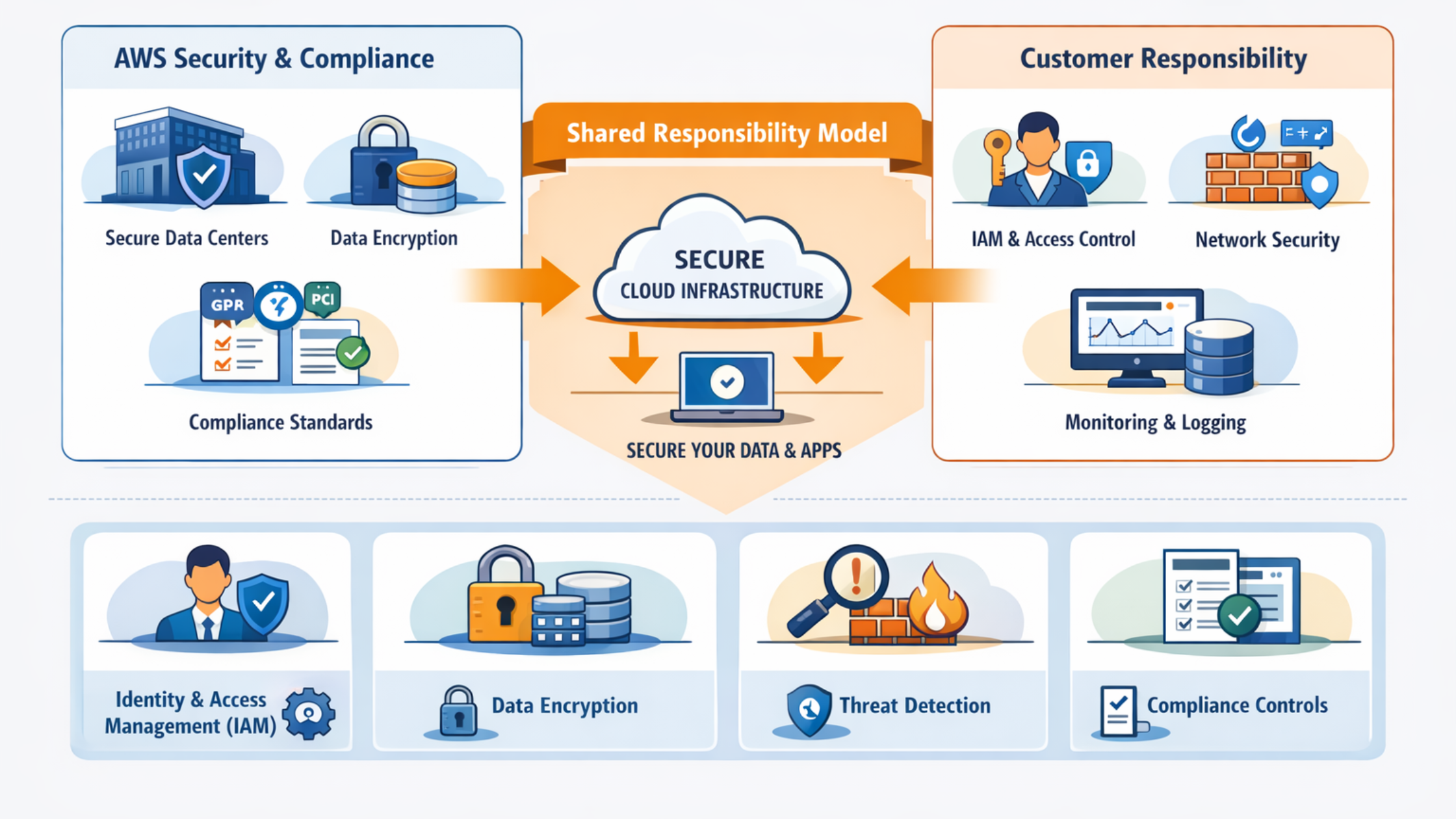
- APP 11 (Security of personal information): Enforce ACSC Essential Eight maturity levels, multi-factor authentication (MFA), and encryption across all managed servers.
- APP 12 (Access and correction): Maintain audit logs and version control to demonstrate individual access rights and data modification trails.
- APP 13 (Correction and complaints): Establish data breach response protocols aligned with OAIC notification timelines.
Server configurations must embed these principles into infrastructure-as-code templates, patch management cycles, and disaster recovery procedures. Techtweek’s 24/7 follow-the-sun support ensures your Australian data centres remain compliant across time zones.
IRAP Readiness and Data Sovereignty in ap-southeast-2
The Australian Government’s Information Security Registered Assessors Program (IRAP) is the gateway to hosting sensitive government and critical infrastructure data. Data sovereignty requirements mandate that personal information collected in Australia remains stored and processed within ap-southeast-2 regions—typically Sydney or Melbourne data centres.
Key IRAP-aligned server management practices:
- Data residency controls: Configure AWS CloudFormation policies to prevent data egress outside Australia. Use ap-southeast-2 S3 buckets with encryption using Australian-managed keys (KMS).
- ACSC Essential Eight compliance: Implement patching cadences, application whitelisting, and DNS filtering to meet maturity level 3 or higher across your server fleet.
- Baseline security configuration: Harden OS images with ACSC hardening guides for Windows Server and Linux. Enable AWS Systems Manager Session Manager to eliminate SSH key management.
- Continuous monitoring: Deploy CloudWatch, GuardDuty, and Security Hub to detect anomalous server behaviour and log all administrative activities for 90+ days.
- IRAP assessment readiness: Maintain system security plans (SSP), risk registers, and evidence packs demonstrating compliance before engaging an IRAP assessor.
Organisations seeking IRAP certification must work with Techtweek’s team to audit existing infrastructure, remediate gaps, and prepare documentation for submission within 6-12 months.
APRA CPS 234 and Data Governance for Financial Institutions
If your organisation is APRA-regulated (banks, insurers, superannuation funds), Prudential Standard CPS 234 (Information Security) layersadditional obligations onto Privacy Act compliance. CPS 234 mandates that financial institutions categorise servers by criticality tier and implement role-based access controls (RBAC), encryption standards, and incident response protocols.
Server management under CPS 234 and APPs:
- Segregate customer data servers from operational infrastructure using VPCs and security groups in ap-southeast-2.
- Enforce encryption with AES-256 for data at rest; TLS 1.2+ for data in transit.
- Conduct annual penetration testing and vulnerability assessments, documented for APRA reporting.
- Implement privileged access management (PAM) to track and audit all superuser-level server changes.
- Establish third-party risk management processes for outsourced server providers (vendor security assessments, contractual compliance clauses).
Techtweek Infotech has guided over 50 APRA-regulated clients through dual compliance frameworks, reducing audit findings by an average of 80% within 12 months.
Practical Implementation: Privacy Act Australian Principles Server Data Management Roadmap
Phase 1 – Baseline Assessment (Weeks 1-4): Audit existing servers for APP alignment, identify data residency violations, and flag ACSC Essential Eight gaps. Document findings in a compliance maturity report.
Phase 2 – Design (Weeks 5-8): Design ap-southeast-2 infrastructure using AWS Well-Architected Framework with privacy and security pillars. Create infrastructure-as-code templates embedding APP controls.
Phase 3 – Remediation (Weeks 9-16): Deploy hardened OS images, enable encryption, configure MFA, and integrate with centralised logging. Perform dry-run penetration testing.
Phase 4 – Governance (Weeks 17+): Establish change advisory boards (CAB), automated compliance scanning via AWS Config, and monthly audit reviews. Prepare IRAP documentation and third-party attestations.
Organisations managing AUD 5M+ in server infrastructure typically achieve full Privacy Act APP compliance within 4-6 months under Techtweek’s managed compliance service.
Frequently Asked Questions
What is the difference between Privacy Act APPs and APRA CPS 234?
APPs are universal privacy principles applying to all organisations handling Australian personal data. APRA CPS 234 is a financial services-specific prudential standard layering stricter IT security, incident reporting, and third-party risk requirements onto Privacy Act obligations. APRA-regulated entities must comply with both frameworks.
Do I need IRAP certification to be compliant with APPs?
Not necessarily. IRAP certification is required only for government agencies, critical infrastructure operators, and contractors handling classified information. However, IRAP frameworks (Information Security Manual) are best practices for Privacy Act compliance. Many private sector organisations adopt IRAP controls without seeking certification.
Can we host Australian personal data on AWS regions outside ap-southeast-2?
Generally no. The Privacy Act and data sovereignty requirements mandate that Australian personal information must reside in Australia. AWS ap-southeast-2 (Sydney/Melbourne) is the compliant choice. Cross-border transfers require explicit consent and contractual safeguards; data handling overseas must be equivalent to Australian Privacy Principles standards.
What does ACSC Essential Eight mean for server management?
ACSC Essential Eight are eight mitigating strategies (patching, application whitelisting, MFA, encryption, etc.). Organisations measure maturity levels 1-3. Level 1 is basic; Level 3 is highly secure. Privacy Act compliance typically requires Level 2 minimum; IRAP assessments expect Level 3 across critical servers in ap-southeast-2.
How long does Privacy Act compliance assessment take?
Initial baseline assessment takes 4-6 weeks for a mid-sized infrastructure (50-200 servers). Full remediation and IRAP readiness typically require 4-6 months depending on current gaps. Techtweek’s accelerated managed service compresses this timeline by 30-40% through parallel workstreams and pre-built compliance templates.
Read the full guide: Server Management Services in Australia.