


DevOps Compliance Checklist for UK Financial Services: Meeting FCA PS21/3 Requirements
DevOps Compliance FCA PS21/3: Your Essential Checklist
UK financial services firms face mounting pressure to demonstrate operational resilience under FCA PS21/3. DevOps compliance FCA PS21/3 requires robust infrastructure controls, continuous monitoring, and incident response capabilities. This checklist guides you through critical compliance touchpoints, ensuring your DevOps practices align with Financial Conduct Authority expectations, ICO UK GDPR requirements, and NCSC Cyber Essentials standards across eu-west-2 AWS regions.
1. Establish Operational Resilience Governance in DevOps
FCA PS21/3 mandates clear accountability for operational resilience. Your DevOps team must integrate compliance governance into deployment pipelines and infrastructure-as-code practices.
- Define Impact Tolerance Thresholds: Document acceptable downtime, data loss, and service degradation for critical business services. Map these directly to your CI/CD release gates.
- Assign DevOps Compliance Ownership: Designate a senior engineer responsible for maintaining compliance artefacts, audit trails, and regulatory communications.
- Create Compliance-Aware Runbooks: Develop incident response procedures that reference FCA notification requirements and UK GDPR breach protocols (72-hour ICO notification window).
- Review Third-Party Vendor Risk: Audit AWS Advanced Partner relationships and SaaS integrations for FCA compliance certifications and data residency commitments within UK regions.
2. Implement NCSC Cyber Essentials Controls in Your DevOps Pipeline
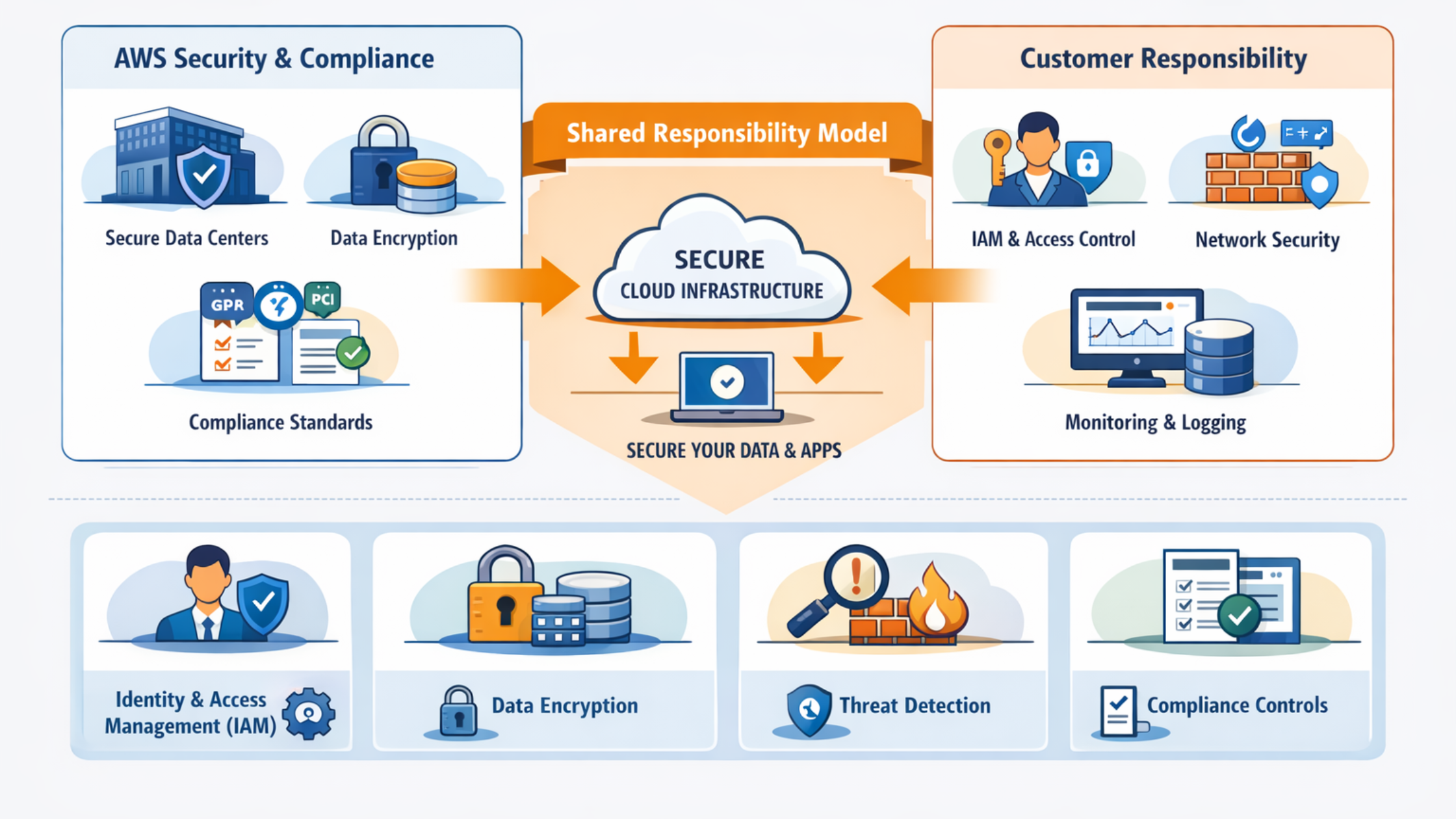
NCSC Cyber Essentials forms the baseline security framework for UK financial services. Embed these controls into your DevOps infrastructure:
- Secure Configuration Management: Use Infrastructure-as-Code (Terraform, CloudFormation) to enforce hardened baselines across all eu-west-2 instances. Version control all configurations and maintain immutable audit logs in CloudTrail.
- Access Control Enforcement: Implement least-privilege IAM policies, multi-factor authentication for all human access, and service-to-service authentication via temporary credentials. Document role-based access controls (RBAC) for compliance audits.
- Vulnerability Scanning Automation: Integrate container image scanning (ECR, Trivy) and dependency checking into every build. Set thresholds that block deployment of high-severity findings.
- Backup and Recovery Testing: Schedule monthly restore drills for critical databases in separate AWS accounts within uk-west-2. Document RTO/RPO metrics and verify compliance with FCA resilience expectations.
3. Meet UK GDPR and Data Protection Requirements
ICO UK GDPR compliance demands transparent data handling in DevOps environments. Your infrastructure must support accountability and data subject rights:
- Data Classification and Encryption: Tag all datasets with sensitivity levels. Enforce encryption at-rest (KMS) and in-transit (TLS 1.2+) for personal data transiting your AWS pipelines.
- Audit Logging and Retention: Enable CloudTrail, VPC Flow Logs, and application-level logging. Retain audit trails for minimum 6 years to support FCA investigations and ICO subject access requests (SARs).
- Automated Data Residency Checks: Deploy AWS Config rules to ensure all storage, databases, and backups remain within UK/EU regions. Prevent accidental cross-border transfers.
- Incident Response Documentation: Maintain a register of data breaches detected through DevOps monitoring. Include timeline, scope, and notification evidence for ICO reporting.
4. Establish Continuous Monitoring and Incident Reporting
FCA PS21/3 requires real-time visibility into critical services. Your DevOps monitoring stack must support rapid detection and escalation:
- Metrics Collection: Instrument applications with CloudWatch, Prometheus, or Datadog. Track API latency, error rates, and resource utilisation. Alert on breaches within 15 minutes of threshold breach.
- Centralised Log Aggregation: Route all DevOps, application, and infrastructure logs to a UK-hosted SIEM (e.g., CloudWatch Logs Insights, Splunk). Ensure logs are searchable for post-incident analysis.
- Automated Compliance Reporting: Build dashboards that surface FCA-relevant metrics: mean-time-to-detection (MTTD), mean-time-to-recovery (MTTR), deployment success rates, and security patch currency.
- Incident Escalation Workflows: Define clear handoff procedures between DevOps teams and Compliance/Risk. Include FCA notification timelines (14-day reporting deadline for operational resilience incidents).
5. Document and Audit Your DevOps Compliance Framework
Regulatory evidence is essential. Maintain comprehensive documentation to demonstrate FCA compliance readiness:
- DevOps Policy Library: Create policies covering change management, access controls, incident response, and disaster recovery. Link each policy to specific FCA PS21/3 clauses.
- Architecture Diagrams: Provide current-state diagrams showing data flows, security boundaries, and resilience mechanisms. Update quarterly and share with your FCA supervisor.
- Testing and Validation Records: Document results from vulnerability assessments, penetration testing (conducted by CREST-certified firms), and resilience testing (chaos engineering exercises).
- Third-Party Audit Support: Prepare for annual FCA visits by maintaining a compliance register, risk log, and evidence repository accessible to auditors in eu-west-2 time zones.
Why Partner with Techtweek Infotech: Our AWS Advanced Consulting Partner team has guided 40+ UK financial services firms through FCA compliance transformations. We operate 24/7 follow-the-sun support across London, India, and APAC regions, ensuring your DevOps infrastructure meets operational resilience standards without business disruption. We embed compliance from day one—not as an afterthought—with proven IaC templates, monitoring blueprints, and audit evidence frameworks.
Frequently Asked Questions
What is FCA PS21/3 and why does it affect my DevOps practices?
FCA PS21/3 (Operational Resilience) requires financial services firms to design, manage, and test critical services to withstand disruption. DevOps directly controls uptime, recovery speed, and incident response—making compliance integral to CI/CD pipelines, infrastructure, and monitoring.
How do NCSC Cyber Essentials and UK GDPR integrate with FCA compliance in DevOps?
NCSC Cyber Essentials provides the security baseline (access control, encryption, vulnerability management). UK GDPR mandates data protection and breach reporting. FCA PS21/3 layers operational resilience on top. All three converge in your DevOps controls—encryption, logging, access, and incident response.
What is the FCA’s 14-day reporting deadline for operational resilience incidents?
FCA requires notification within 14 calendar days if a service disruption exceeds your firm’s impact tolerance threshold. DevOps monitoring must detect breaches quickly, and incident teams must investigate, analyse, and report findings to your FCA supervisor within this window.
Which AWS regions should we use for FCA PS21/3 compliance in the UK?
Use eu-west-2 (London) or eu-west-1 (Ireland) for data residency. Ensure all backups, disaster recovery, and failover infrastructure remain within UK/EU. Use AWS Config rules to enforce regional constraints automatically.
How often should we conduct resilience testing under FCA PS21/3?
FCA expects at least annual resilience testing for critical services. Conduct monthly recovery drills, quarterly chaos engineering exercises, and annual full-scenario simulations. Document all results and share with your FCA supervisor.
Can Techtweek Infotech help us meet FCA compliance timelines?
Yes. Our AWS Advanced Partner team provides rapid DevOps compliance assessments, IaC remediation, monitoring setup, and audit evidence frameworks. We work 24/7 to accelerate your FCA readiness without halting live services.
Read the full guide: DevOps Consulting Services in UK.