

Automating Compliance: How HITRUST Consulting Services Leverage GRC Tools
In today’s rapidly evolving cybersecurity and regulatory landscape, compliance is no longer a once-a-year exercise. Organizations operating in healthcare, SaaS, fintech, and cloud environments are under constant pressure to protect sensitive data while meeting strict regulatory requirements. Among the most demanding frameworks is the HITRUST Common Security Framework (CSF), which combines multiple standards such as HIPAA, NIST, ISO, PCI DSS, and SOC into a single, comprehensive model.
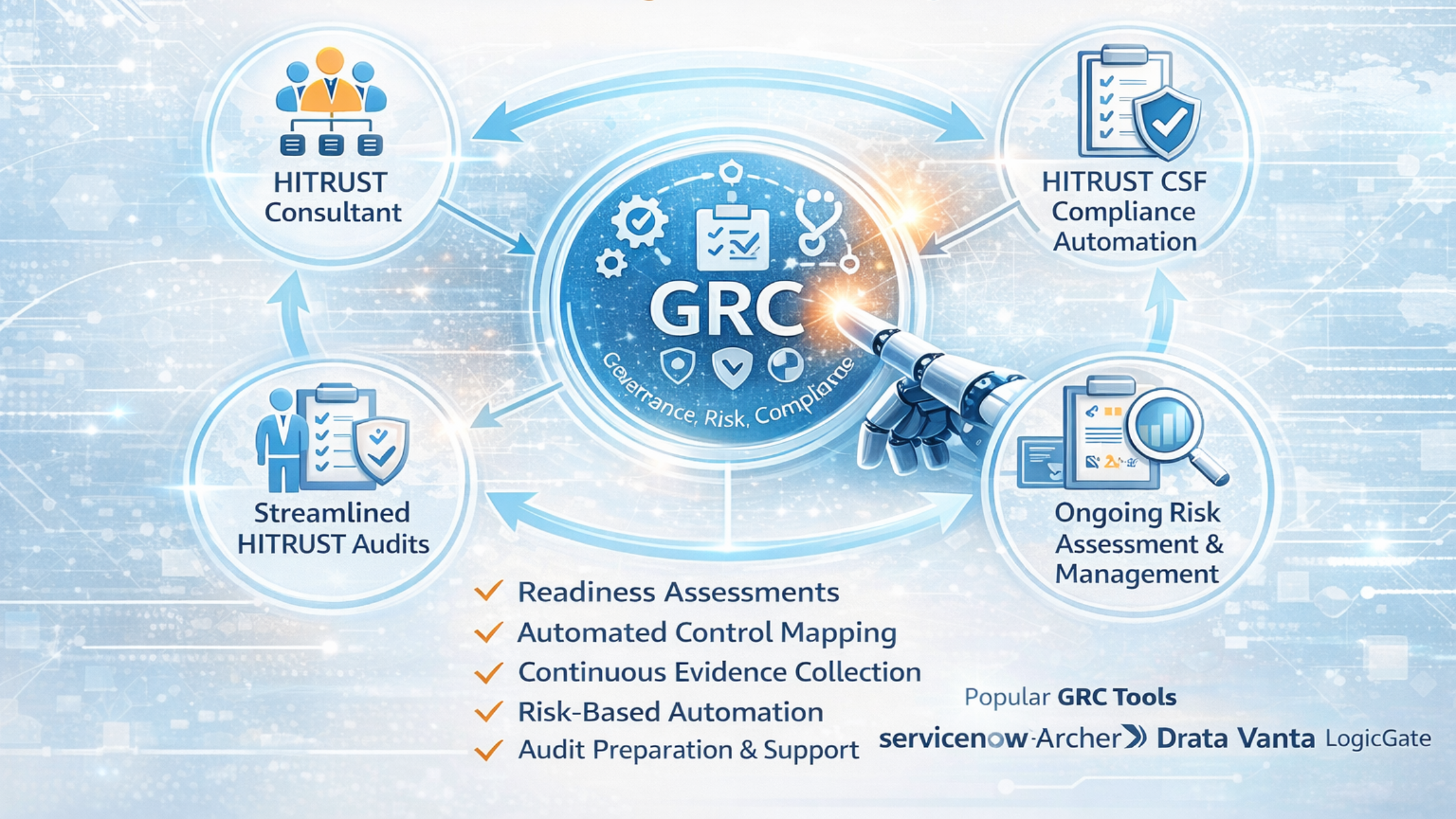
As HITRUST requirements grow more complex, manual compliance methods are becoming ineffective and risky. This is where HITRUST consulting services, combined with Governance, Risk, and Compliance (GRC) tools, are transforming how organizations approach compliance. Automation is now the foundation of sustainable HITRUST compliance, enabling continuous monitoring, faster assessments, and reduced audit fatigue.
The Growing Complexity of HITRUST Compliance
HITRUST was designed to simplify compliance by providing a unified framework, but implementing it has become increasingly challenging. Organizations must manage hundreds of controls, frequent updates, and evolving threat scenarios. Manual spreadsheets, static documents, and ad-hoc evidence collection simply cannot keep pace with modern compliance demands.
HITRUST consulting services address this challenge by introducing structured, automated processes through GRC platforms. Instead of reacting to audits, organizations gain the ability to continuously manage risk and compliance in real time.
Key challenges driving the need for automation include:
- Increasing number of HITRUST CSF control requirements
- Continuous updates to regulatory mappings
- Greater scrutiny from auditors and regulators
- Expanding cloud and third-party environments
- Rising costs of compliance failures and delays
Understanding GRC Tools in the Context of HITRUST
GRC tools are centralized platforms designed to manage governance policies, assess and track risk, and ensure compliance with regulatory frameworks. When applied correctly, these tools act as a single source of truth for compliance activities. However, without expert guidance, many organizations struggle to configure GRC tools effectively for HITRUST.
This is where HITRUST consulting services play a critical role. Consultants align GRC platforms specifically to HITRUST CSF requirements, ensuring that automation supports certification goals rather than creating additional complexity.
Core functions of GRC tools in HITRUST compliance include:
- Centralized policy and control management
- Automated control mapping and assessments
- Risk scoring and remediation tracking
- Evidence collection and audit preparation
- Continuous monitoring and reporting
Why Manual HITRUST Compliance Is No Longer Sustainable
Traditional compliance approaches rely heavily on human effort. Teams manually collect screenshots, update spreadsheets, chase control owners, and prepare documentation just weeks before an audit. This reactive approach leads to errors, missed controls, and audit delays.
HITRUST consulting services replace this inefficiency with automation-driven compliance models. By integrating GRC tools into daily operations, compliance becomes a continuous process rather than an annual crisis.
Limitations of manual compliance include:
- High risk of human error
- Inconsistent control implementation
- Poor visibility into real-time compliance status
- Increased audit stress and fatigue
- Longer certification timelines
Automated HITRUST Readiness Assessments
One of the most valuable ways HITRUST consulting services leverage GRC tools is through automated readiness assessments. Instead of manually reviewing controls, consultants configure GRC platforms to assess existing security measures against HITRUST CSF requirements.
This automation allows organizations to quickly identify gaps, prioritize remediation, and estimate readiness timelines with greater accuracy. It also reduces the likelihood of surprises during formal assessments.
Benefits of automated readiness assessments include:
- Faster identification of control gaps
- Clear visibility into compliance maturity
- Risk-based prioritization of remediation tasks
- Reduced dependency on manual reviews
- Improved assessment accuracy
Centralized Control Mapping Across Frameworks
HITRUST’s strength lies in its ability to map multiple regulations into one framework. However, managing these mappings manually is extremely difficult. GRC tools, when configured by HITRUST consulting services, automate this process and ensure consistency across frameworks.
This centralized approach allows organizations to meet multiple compliance requirements simultaneously, reducing duplicated effort and lowering long-term compliance costs.
Key advantages of centralized control mapping include:
- One set of controls mapped to multiple frameworks
- Reduced duplication of compliance work
- Improved alignment between security and compliance teams
- Easier reporting to stakeholders and auditors
- Support for “assess once, report many” strategies
Continuous Evidence Collection and Monitoring
Evidence collection is one of the most time-consuming aspects of HITRUST compliance. Manual uploads and last-minute documentation often lead to incomplete or outdated evidence. GRC tools solve this problem by enabling continuous evidence collection directly from integrated systems.
HITRUST consulting services ensure these integrations are properly configured, allowing evidence to be collected automatically and monitored in real time. This approach dramatically reduces audit preparation effort and increases confidence in compliance posture.
Capabilities enabled through continuous evidence monitoring include:
- Automated evidence collection from cloud and security tools
- Real-time validation of control effectiveness
- Alerts for missing or expired evidence
- Reduced reliance on manual documentation
- Improved audit readiness at all times
Risk-Based Compliance Automation
Not all HITRUST controls carry the same level of risk. Treating every control equally wastes time and resources. HITRUST consulting services use GRC tools to introduce risk-based compliance models, ensuring high-risk areas receive priority attention.
By automating risk scoring and remediation tracking, organizations can focus their efforts where they matter most, strengthening both security and compliance outcomes.
Risk-based automation enables organizations to:
- Identify high-impact compliance risks quickly
- Assign ownership and accountability clearly
- Track remediation progress in real time
- Align compliance efforts with business risk
- Improve decision-making using data-driven insights
Streamlining HITRUST Audit Management
HITRUST audits are rigorous and time-intensive. Without automation, audit preparation can disrupt business operations for months. GRC tools streamline this process by providing structured workflows, centralized documentation, and controlled auditor access.
HITRUST consulting services optimize these workflows, ensuring that audit requirements are met efficiently while minimizing disruption to internal teams.
Audit management improvements include:
- Pre-configured HITRUST assessment workflows
- Centralized access to policies and evidence
- Reduced back-and-forth with auditors
- Faster certification timelines
- Improved audit confidence and outcomes
The Role of HITRUST Consultants in GRC Tool Implementation
Deploying a GRC tool alone does not guarantee compliance success. Many organizations fail because tools are poorly configured or misaligned with HITRUST requirements. HITRUST consulting services bridge this gap by combining technical expertise with regulatory knowledge.
Consultants ensure that GRC platforms support HITRUST certification goals rather than becoming underutilized or overly complex systems.
Key responsibilities of HITRUST consultants include:
- Selecting the right GRC platform
- Configuring HITRUST-specific control mappings
- Training internal teams on proper usage
- Aligning automation with audit expectations
- Continuously optimizing compliance workflows
Supporting Continuous Compliance and Monitoring
HITRUST is increasingly moving toward continuous assurance rather than point-in-time validation. Automated GRC platforms enable organizations to maintain compliance throughout the year, reducing last-minute remediation and audit stress.
HITRUST consulting services help organizations shift from reactive compliance to proactive risk management, ensuring long-term sustainability.
Continuous compliance benefits include:
- Always-on visibility into compliance status
- Early detection of control failures
- Reduced compliance gaps over time
- Better alignment with evolving regulations
- Stronger security posture overall
HITRUST Compliance in Cloud and Hybrid Environments
Modern organizations rely heavily on cloud and hybrid infrastructures, which introduce new risks and compliance challenges. GRC tools integrated with cloud environments allow real-time monitoring of security controls and configurations.
HITRUST consulting services ensure these integrations align with HITRUST CSF requirements, enabling secure cloud adoption without compromising compliance.
Cloud-focused automation advantages include:
- Real-time visibility into cloud security controls
- Automated validation of configurations
- Improved third-party risk management
- Faster response to security changes
- Better alignment with HITRUST cloud requirements
The Future of HITRUST Compliance Automation
As cybersecurity threats become more sophisticated, HITRUST compliance will continue to evolve. Automation, artificial intelligence, and continuous monitoring will define the future of compliance management.
Organizations that invest early in automated compliance frameworks, guided by HITRUST consulting services, will be better positioned to adapt to regulatory changes and emerging risks.
Future trends shaping HITRUST compliance include:
- Continuous compliance validation
- AI-driven risk analysis
- Automated third-party assessments
- Integrated security and compliance operations
- Real-time audit readiness
Conclusion
Automating compliance is no longer optional for organizations pursuing HITRUST certification. Manual approaches are inefficient, error-prone, and unsustainable in today’s regulatory environment. By combining advanced GRC tools with expert HITRUST consulting services, organizations can streamline compliance processes, reduce audit fatigue, and maintain continuous assurance.
HITRUST consulting services ensure that automation is implemented strategically, aligning technology with regulatory expectations and business goals. As compliance continues to shift toward continuous monitoring and risk-based models, organizations that embrace automation today will gain a lasting competitive advantage.

Author