

The Evolution of NOC Monitoring Services: Where Remote IT Support Fits in 2026
Over the past decade, Network Operations Center (NOC) Monitoring Services have undergone a massive transformation. What once started as a reactive setup focused only on monitoring servers and networks has now evolved into an intelligent, proactive, and service-oriented function. As businesses move toward cloud-first strategies, remote work models, and always-on digital services, the traditional NOC model is no longer sufficient on its own.
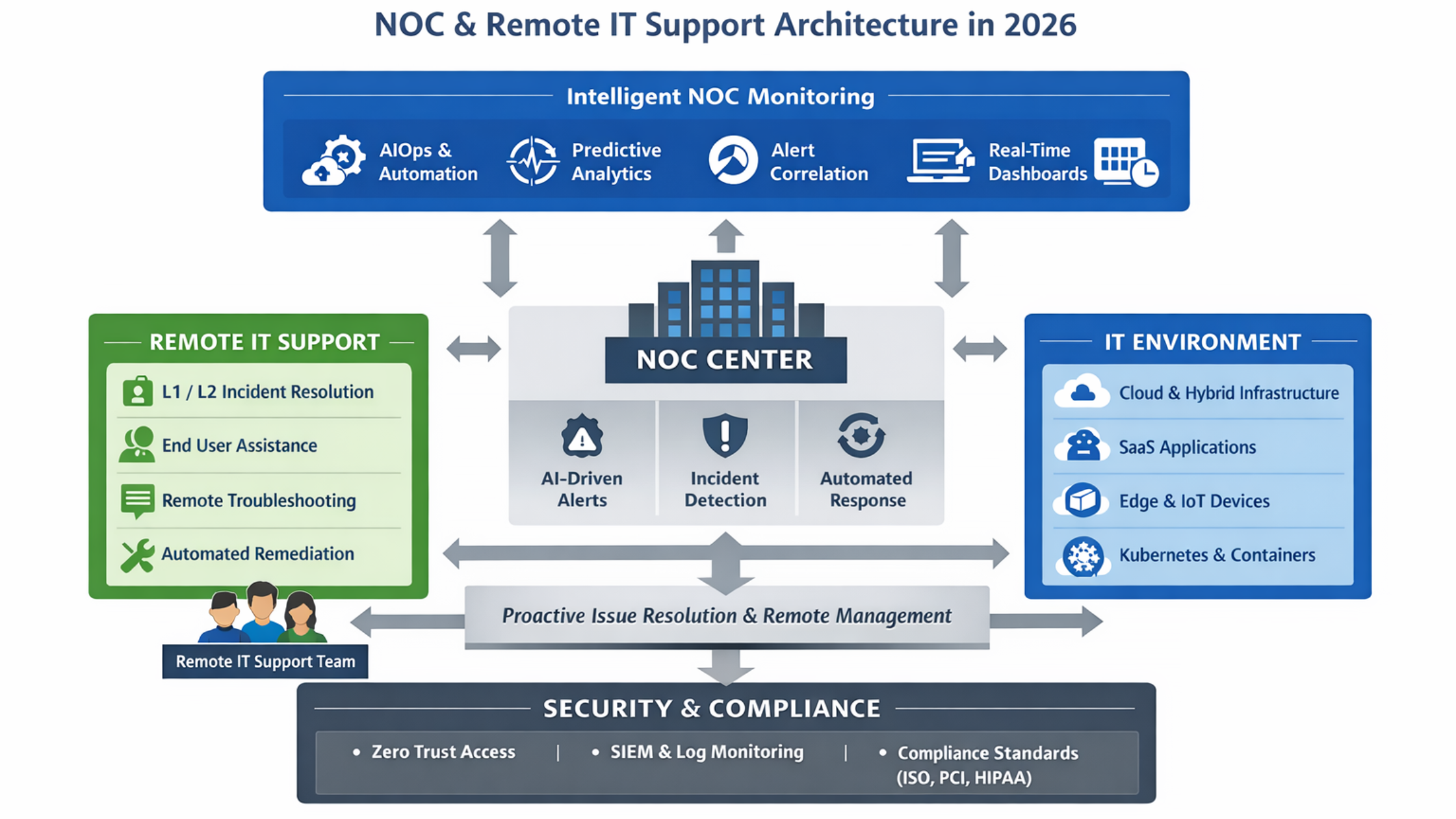
By 2026, Remote IT Support Services have become a critical component of modern NOC Monitoring Services. They bridge the gap between real-time infrastructure monitoring and immediate issue resolution. Instead of just detecting problems, today’s NOCs actively resolve them—often without human intervention or onsite presence. This evolution is driven by automation, AI-powered monitoring, security requirements, and the growing need for uninterrupted digital experiences.
The Traditional Role of NOC Monitoring Services
In the early days, NOC Monitoring Services were primarily responsible for keeping an eye on network devices, servers, and basic infrastructure components. The goal was simple—ensure systems stayed online. Alerts were generated when thresholds were breached, and incidents were escalated to other teams for resolution. This approach worked when IT environments were smaller, centralized, and predictable.
However, this reactive model had limitations. NOC teams often lacked visibility into applications, end-user experience, and cloud environments. Resolution depended heavily on manual intervention and multiple handoffs, leading to delays and higher downtime.
Key characteristics of traditional NOC monitoring included:
- Focus on uptime rather than performance
- Manual alert handling and escalation
- Limited automation
- Minimal involvement in issue resolution
- Heavy dependency on onsite IT teams
Why NOC Monitoring Had to Evolve
As digital transformation accelerated, IT environments became more complex. Organizations adopted hybrid infrastructure, multi-cloud platforms, SaaS applications, and remote workforces. Downtime became more expensive, and user expectations increased significantly. Businesses could no longer afford slow response times or reactive troubleshooting.
This forced NOC Monitoring Services to evolve from a monitoring-only function to a proactive operations hub. The modern NOC is expected not just to detect issues, but to analyze, prioritize, and resolve them before they impact business operations.
Key drivers behind this evolution include:
- Cloud and hybrid infrastructure adoption
- Remote and distributed workforce models
- Increased cybersecurity threats
- Strict SLA and compliance requirements
- Demand for real-time performance and availability
The Rise of Proactive and Intelligent NOC Monitoring
By 2026, NOC Monitoring Services are powered by advanced technologies such as AIOps, predictive analytics, and observability platforms. Instead of reacting to alerts, NOCs now anticipate issues by analyzing patterns, trends, and anomalies across systems.
This proactive approach allows teams to fix problems before users even notice them. However, detection alone is not enough. For proactive monitoring to be effective, it must be tightly integrated with Remote IT Support Services that can act immediately on insights generated by the NOC.
Modern NOC capabilities now include:
- Predictive issue detection
- Automated alert correlation
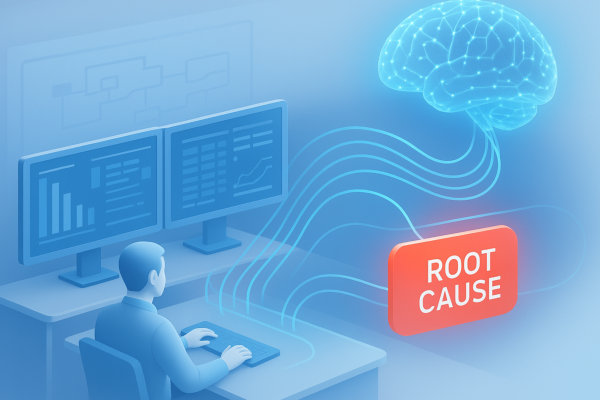
- Root cause analysis
- Real-time performance monitoring
- Integration with ITSM and DevOps tools
Where Remote IT Support Fits into NOC Monitoring Services
Remote IT Support Services have become the operational backbone of modern NOCs. In 2026, remote support teams are no longer separate from NOC operations—they are embedded within them. When a monitoring alert is triggered, remote IT support engineers act as the first responders.
This integration allows issues to be resolved faster, without escalation delays or onsite visits. Remote IT support teams handle infrastructure issues, application errors, endpoint problems, and even user-facing incidents directly from the NOC environment.
Remote IT support plays a key role by:
- Responding immediately to NOC alerts
- Resolving incidents remotely at L1 and L2 levels
- Supporting end users and business applications
- Reducing dependency on onsite IT staff
Shift-Left Operations and Faster Issue Resolution
One of the most important changes in 2026 is the adoption of the shift-left model in NOC Monitoring Services. This means problems are resolved as early as possible in the support lifecycle, often by remote IT support teams before escalation is required.
Remote IT support engineers are trained to handle a broader range of issues, supported by automation, knowledge bases, and standardized playbooks. This significantly reduces Mean Time to Resolution (MTTR) and improves service quality.
Benefits of shift-left NOC operations include:
- Faster incident resolution
- Fewer escalations to higher support tiers
- Reduced operational costs
- Improved SLA performance
- Better end-user experience
Automation and Self-Healing in Modern NOCs
Automation is a defining feature of NOC Monitoring Services in 2026. Many routine issues—such as service restarts, disk cleanups, or configuration fixes—are handled automatically. Remote IT support teams focus on exceptions, complex incidents, and decision-making.
Self-healing systems triggered by NOC alerts reduce manual workload and prevent recurring problems. Remote IT support teams design, manage, and optimize these automation workflows.
Automation-driven NOC benefits include:
- Reduced alert fatigue
- Consistent issue resolution
- Faster recovery times
- Improved system reliability
- Lower human error
Supporting Cloud, Hybrid, and Edge Environments
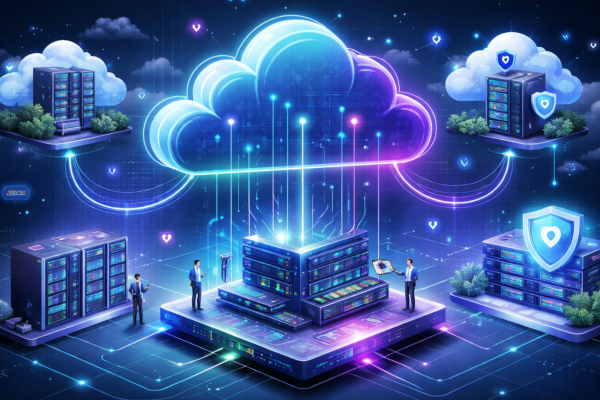
Modern IT environments are no longer confined to data centers. NOC Monitoring Services now cover cloud platforms, SaaS applications, containers, edge devices, and IoT infrastructure. Managing such environments manually is not scalable.
Remote IT Support Services enable centralized troubleshooting across diverse platforms. Engineers can remotely access systems, analyze logs, apply fixes, and coordinate with cloud providers—all without physical presence.
Remote support enables effective NOC monitoring for:
- Multi-cloud and hybrid infrastructure
- Kubernetes and container platforms
- SaaS and third-party applications
- Edge computing and IoT devices
Security and Compliance in NOC and Remote IT Support
Security is no longer a separate function—it is built into NOC Monitoring Services. Remote IT support teams play a crucial role in handling security alerts, investigating incidents, and supporting compliance requirements.
Secure remote access, zero-trust models, and strict access controls ensure that remote support activities do not introduce additional risks. Logs and monitoring data also support compliance frameworks such as ISO 27001, PCI DSS, HIPAA, and GDPR.
Security-focused NOC benefits include:
- Faster detection of security incidents
- Controlled and auditable remote access
- Improved incident response
- Stronger compliance posture
- Reduced risk exposure
Business Benefits of Integrated NOC and Remote IT Support
The integration of Remote IT Support Services into NOC Monitoring Services delivers measurable business value. Organizations experience less downtime, improved productivity, and predictable IT operations.
Instead of reacting to failures, businesses gain confidence that issues will be detected and resolved proactively—often before they impact customers or employees.
Key business benefits include:
- Higher system availability
- Reduced IT operational costs
- Improved SLA adherence
- Enhanced user satisfaction
- Scalable IT operations
The NOC Operating Model in 2026
By 2026, the NOC is no longer just a monitoring room—it is an intelligent operations center. Remote IT support teams, automation platforms, and AI-driven insights work together to ensure seamless IT performance.
Human expertise remains essential, especially for decision-making, optimization, and complex troubleshooting. Remote IT support acts as the human intelligence layer within increasingly autonomous NOC environments.
The modern NOC model includes:
- AI-powered monitoring tools
- Remote IT support as first responders
- Automated remediation workflows
- Follow-the-sun operations
- Data-driven performance optimization
Future Outlook: Beyond 2026
Looking ahead, NOC Monitoring Services will continue evolving toward autonomous operations. While AI and automation will handle routine tasks, Remote IT Support Services will remain critical for managing complexity, innovation, and exceptions.
The future NOC will be less about watching dashboards and more about orchestrating intelligent systems that keep businesses running without interruption.
Future trends include:
- Autonomous NOCs
- Increased reliance on AIOps
- Advanced observability platforms
- Greater collaboration between NOC, SOC, and DevOps teams
- Remote IT support as strategic enablers
Conclusion
The evolution of NOC Monitoring Services reflects the changing nature of IT itself. In 2026, monitoring alone is not enough. Businesses need proactive, intelligent, and integrated operations that can respond instantly to issues. Remote IT Support Services have become a foundational part of this new NOC model, enabling faster resolution, stronger security, and better user experiences.
As IT environments grow more complex, organizations that align NOC Monitoring Services with robust remote IT support will be better positioned to achieve resilience, scalability, and long-term success.

Author