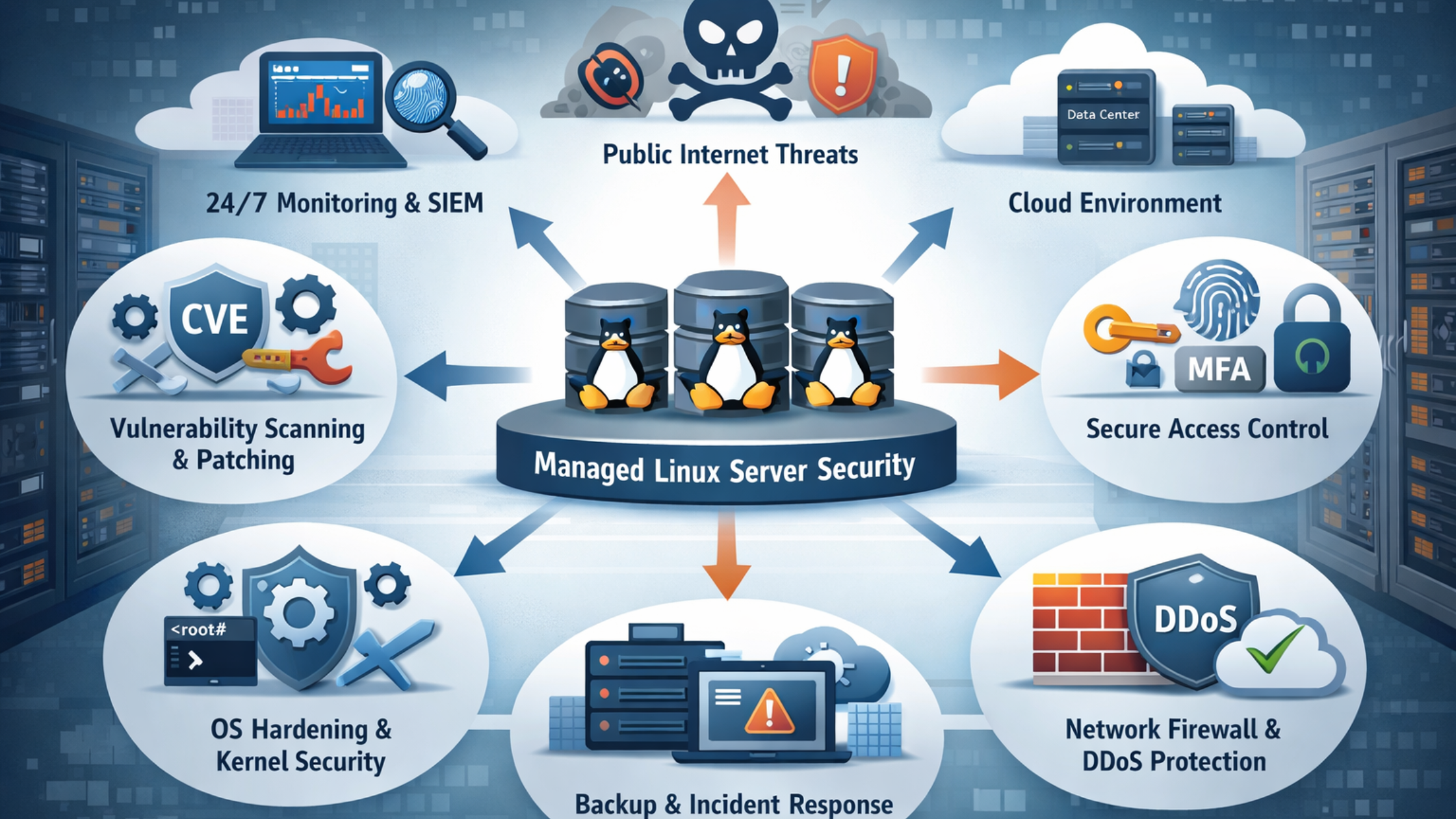
Cyber attacks are increasing every year, and Linux servers are often a primary target because they power websites, cloud platforms, applications, and databases. While Linux is known for its strong security, misconfiguration, delayed updates, and lack of monitoring can still leave servers vulnerable.
This is where Managed Linux Server Services play a critical role. These services focus on proactive security management, helping businesses prevent cyber attacks before they cause damage.
Preventing Cyber Attacks with Managed Linux Server Services
1. OS-Level Attack Surface Reduction
Managed Linux Server Services reduce the attack surface by removing unnecessary components that attackers commonly exploit. This includes disabling unused services, closing non-essential ports, and enforcing secure kernel and filesystem configurations. By limiting what is exposed to the network and users, the probability of successful exploitation is significantly reduced.
Key actions include:
-
Disabling unused systemd services and daemons
-
Applying secure sysctl kernel parameters
-
Removing legacy and vulnerable packages
-
Mounting filesystems with noexec, nosuid, nodev
2. Kernel-Level Security and Exploit Mitigation
The Linux kernel is protected using mandatory access controls and exploit prevention mechanisms. Even if an application is compromised, kernel-level controls prevent it from escalating privileges or accessing restricted resources.
Key actions include:
-
Enforcing SELinux or AppArmor policies
-
Applying Seccomp syscall filtering
-
Enabling ASLR and kernel exploit mitigations
-
Using live kernel patching for critical CVEs
3. Continuous Vulnerability and CVE Management
Managed services continuously assess Linux servers for known vulnerabilities and exposed CVEs. Instead of waiting for scheduled updates, risks are prioritized and mitigated based on exploit availability and exposure level.
Key actions include:
-
Continuous vulnerability scanning
-
CVE risk prioritization using CVSS
-
Automated patching with rollback controls
-
Temporary mitigation for zero-day vulnerabilities
-
Secure Access Management and Privilege Control
Strict access control ensures that only authorized users can access Linux servers. Managed Linux Server Services eliminate weak authentication methods and enforce least-privilege access to prevent lateral movement and credential abuse.
Key actions include:
-
SSH key-based authentication only
-
Disabled root login and password access
-
Role-based sudo policies
-
Multi-factor authentication using PAM
5. Network-Level Protection and Segmentation
Linux servers are protected by layered network controls that filter malicious traffic before it reaches critical services. Network segmentation limits the spread of attacks if a system is compromised.
Key actions include:
-
Host-based firewalls using iptables or nftables
-
Automated brute-force blocking
-
Geo-blocking and IP reputation filtering
-
Network segmentation and micro-segmentation
6. Runtime Threat Detection and Behavioral Monitoring
Instead of relying on traditional antivirus tools, managed services monitor system behavior in real time. Suspicious activity is detected based on anomalies rather than known signatures.
Key actions include:
-
Process execution monitoring
-
File integrity monitoring (FIM)
-
Privilege escalation detection
-
Cryptomining and abnormal network activity detection
7. Centralized Logging and Audit Readiness
Centralized and tamper-resistant logging ensures complete visibility into system activity. This allows rapid threat detection, forensic analysis, and compliance reporting.
Key actions include:
-
Centralized log aggregation
-
Auditd configuration for privileged actions
-
Immutable log storage
-
Time synchronization for accurate event tracking
-
Configuration Management and Drift Prevention
Security configurations are continuously enforced to prevent unauthorized or accidental changes. This ensures Linux servers remain aligned with approved security baselines at all times.
Key actions include:
-
Infrastructure as Code (IaC) enforcement
-
Continuous configuration compliance checks
-
Automated drift detection and remediation
-
Version-controlled system configurations
-
Container and Workload Security
For containerized Linux environments, managed services secure both the host and runtime workloads. This prevents container escape attacks and supply-chain compromises.
Key actions include:
-
Hardened host OS for container workloads
-
Least-privilege container execution
-
Image vulnerability scanning
-
Runtime container behavior monitoring
10. Incident Response and Automated Recovery
When a cyber attack occurs, rapid response is critical. Managed Linux Server Services execute predefined incident response workflows to contain and remediate threats quickly.
Key actions include:
-
Immediate system isolation
-
Credential revocation and access blocking
-
Forensic snapshot capture
-
Automated recovery from trusted images
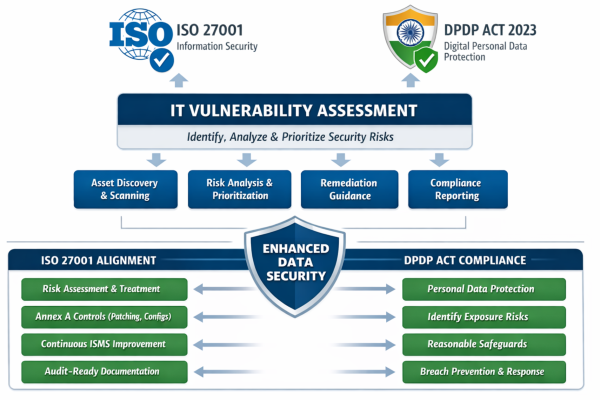
11. Compliance-Driven Security Controls
Security controls are continuously aligned with regulatory and industry compliance frameworks. This ensures Linux environments remain secure, auditable, and compliant.
Key actions include:
-
Mapping controls to ISO 27001, PCI DSS, SOC 2
-
Continuous compliance monitoring
-
Audit-ready logging and access controls
-
Documented security policies and procedures
Conclusion
Managed Linux Server Services protect against cyber attacks by enforcing deep technical controls across the OS, kernel, network, and runtime layers. By combining automation, continuous monitoring, and expert security operations, these services prevent attacks before they impact business operations.