A hybrid cloud environment combines on-premise infrastructure, public cloud, and private cloud systems into one connected architecture. Businesses use hybrid cloud to gain flexibility, improve scalability, and control costs while keeping sensitive data secure.
In a hybrid cloud setup:
- On-premise infrastructure handles legacy or sensitive workloads
- Public cloud provides scalability and global access
- Private cloud offers better control and compliance
Because data and applications move across multiple environments, network visibility becomes more complex, making network infrastructure monitoring essential.
What Is Network Infrastructure Monitoring?
Network infrastructure monitoring is the process of continuously tracking the health, performance, and availability of network components across all environments. It ensures that every part of the network works smoothly and efficiently.
This type of monitoring focuses on:
- Network devices such as routers, switches, and firewalls
- Traffic flow between systems and users
- Performance metrics like latency, bandwidth usage, and packet loss
In hybrid cloud environments, monitoring tools must provide centralized visibility across both physical and cloud-based networks.
Importance of Network Infrastructure Monitoring in Hybrid Cloud
Hybrid cloud networks are dynamic and distributed, which increases the risk of performance issues and security gaps. Without proper monitoring, businesses may experience frequent downtime and slow application performance.
Network infrastructure monitoring helps by:
- Detecting network issues early before they impact users
- Maintaining consistent performance across all environments
- Improving troubleshooting speed through real-time alerts
- Supporting business continuity and operational reliability
This makes monitoring a critical component of modern IT strategies.
Monitoring On-Premise Network Infrastructure
On-premise infrastructure includes physical servers, network devices, and internal applications hosted within an organization’s data center. Monitoring this environment ensures stability and compatibility with cloud systems.
Effective on-premise monitoring focuses on:
- Device health and uptime to prevent hardware failures
- Internal traffic flow to identify bottlenecks
- Network latency and packet loss that affect application performance
- Secure communication between on-premise and cloud environments
By monitoring on-premise networks, businesses can keep legacy systems running efficiently while integrating with cloud services.
Monitoring Public Cloud Network Infrastructure
Public cloud environments rely on virtual networks instead of physical devices. This makes monitoring more complex, as businesses have limited control over the underlying infrastructure.
Public cloud network monitoring includes:
- Tracking virtual machines and cloud network components
- Monitoring data flow between cloud services and end users
- Measuring latency and bandwidth across regions
- Ensuring availability of cloud-based applications
A strong network infrastructure monitoring service integrates with cloud platforms to provide accurate, real-time insights.
Monitoring Private Cloud Network Infrastructure
Private cloud environments offer greater control and security but still require continuous monitoring to maintain performance and compliance.
Private cloud monitoring focuses on:
- Virtual network performance and resource utilization
- Internal traffic between workloads and applications
- Security policies and access controls
- High availability and fault tolerance
Monitoring private cloud infrastructure ensures that sensitive data remains secure and network performance stays consistent.
Unified Network Monitoring Across Hybrid Cloud
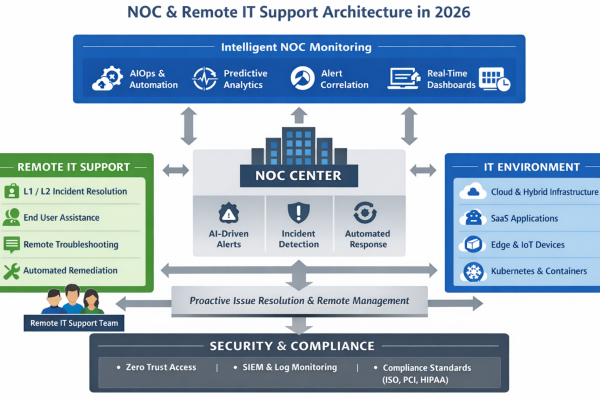
One of the biggest challenges in hybrid cloud environments is managing multiple monitoring tools. Unified network monitoring solves this problem by providing a single dashboard view.
Unified monitoring helps by:
- Correlating network data from on-premise and cloud environments
- Offering end-to-end visibility of traffic flows
- Simplifying alert management and reporting
- Reducing operational complexity
This centralized approach improves efficiency and decision-making.
Benefits of Network Infrastructure Monitoring in Hybrid Cloud Environments
A well-implemented network infrastructure monitoring service delivers multiple business benefits.
Key benefits include:
- Reduced downtime through proactive issue detection
- Improved network performance and user experience
- Enhanced security and threat visibility
- Better capacity planning and resource optimization
- Lower operational costs through efficient monitoring
These benefits help businesses operate smoothly in complex hybrid environments.
Common Challenges in Hybrid Cloud Network Monitoring
Despite its benefits, hybrid cloud network monitoring comes with challenges that must be addressed.
Common challenges include:
- Limited visibility across different environments
- Multiple monitoring tools causing data silos
- Alert fatigue due to excessive notifications
- Difficulty in tracking end-to-end traffic
Modern monitoring solutions use automation and AI to overcome these challenges.
Best Practices for Network Infrastructure Monitoring in Hybrid Cloud
Following best practices helps businesses maximize the value of their monitoring efforts.
Best practices include:
- Using a centralized monitoring platform
- Monitoring both performance and security metrics
- Setting intelligent alerts to reduce noise
- Regularly reviewing reports and trends
- Integrating monitoring with DevOps and security tools
These practices ensure consistent and reliable network operations.
Conclusion
Network infrastructure monitoring in hybrid cloud environments is essential for maintaining performance, security, and reliability. By monitoring on-premise, public cloud, and private cloud architectures together, businesses gain complete visibility and control.
With the right network infrastructure monitoring service, organizations can reduce downtime, improve efficiency, and confidently manage complex hybrid cloud networks.