In today’s digital landscape, protecting data is no longer just an IT concern—it’s a business priority. Organizations handle sensitive customer information, financial data, and critical business assets every day. This is where AWS Infrastructure Services play a crucial role.
With built-in security features, global compliance standards, and scalable architecture, AWS Infrastructure Services help businesses create a secure cloud environment while meeting strict regulatory requirements. Whether you are a startup or an enterprise, AWS provides the tools needed to safeguard your data and maintain compliance without complexity.
Understanding Security in AWS Infrastructure Services
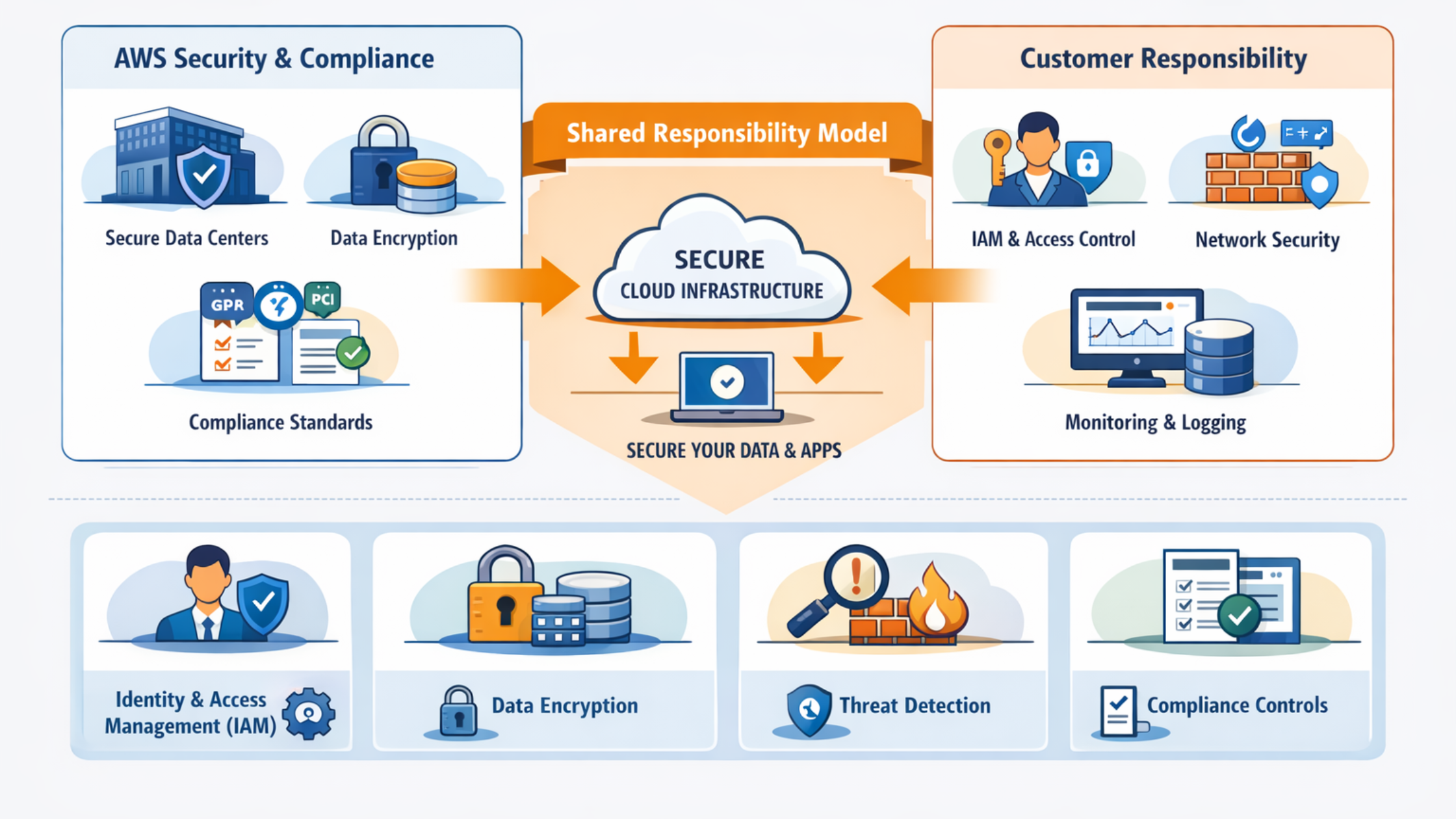
Security in AWS Infrastructure Services is based on a strong foundation known as the shared responsibility model.
- AWS is responsible for securing the cloud infrastructure (data centers, hardware, networking)
- Customers are responsible for securing their data, applications, and access controls
This model ensures that both AWS and businesses actively contribute to maintaining a secure environment.
Key Security Features of AWS Infrastructure Services
1. Advanced Data Encryption
One of the core strengths of AWS Infrastructure Services is data encryption.
This ensures that sensitive information remains protected from unauthorized access.
2. Identity and Access Management (IAM)
AWS Infrastructure Services provide powerful identity and access control mechanisms.
Role-based access control
Least privilege permissions
Multi-Factor Authentication (MFA)
These features help organizations restrict access and minimize security risks.
3. Secure Network Architecture
Network security is another important layer in AWS Infrastructure Services.
Virtual Private Cloud (VPC) for isolated environments
Firewall protection through security groups
Controlled traffic using network access rules
This layered approach ensures that only authorized traffic can access your systems.
4. Continuous Monitoring and Threat Detection
AWS Infrastructure Services include real-time monitoring tools that help detect and respond to threats quickly.
This proactive approach helps businesses stay ahead of potential security risks.
5. Highly Secure Data Centers
AWS infrastructure is backed by globally distributed and highly secure data centers.
- 24/7 surveillance and monitoring
- Strict access control systems
- Disaster-resilient architecture
These physical security measures add another layer of protection to your data.
How AWS Infrastructure Services Support Compliance
1. Global Compliance Standards
AWS Infrastructure Services are designed to meet international compliance requirements such as:
GDPR
HIPAA
PCI DSS
ISO standards
This helps businesses operate confidently across different regions and industries.
2. Built-in Compliance Tools
AWS simplifies compliance management through automated tools.
These tools reduce manual effort and ensure consistent compliance.
3. Data Control and Governance
With AWS Infrastructure Services, businesses can control where their data is stored and processed.
This is especially useful for organizations dealing with strict data protection laws.
4. Backup and Disaster Recovery
Data loss can be costly, but AWS Infrastructure Services provide reliable recovery solutions.
- Automated backups
- Multi-region replication
- Fast disaster recovery
This ensures business continuity even during unexpected events.
Best Practices for Securing AWS Infrastructure Services
To maximize the benefits of AWS Infrastructure Services, businesses should follow these best practices:
- Enable encryption for all data
- Apply least privilege access policies
- Regularly monitor logs and activities
- Perform security audits and updates
- Implement strong backup strategies
Common Security Mistakes to Avoid
Even with strong tools, misconfigurations can create risks. Avoid:
- Publicly exposed storage
- Weak access permissions
- Ignoring monitoring alerts
- Lack of regular security updates
Fixing these issues can significantly improve your security posture.
Benefits of AWS Infrastructure Services for Security and Compliance
Using AWS Infrastructure Services provides long-term advantages:
- Enhanced data protection
- Reduced risk of cyber threats
- Easier compliance management
- Improved customer trust
- Scalable and flexible security solutions
Conclusion
AWS Infrastructure Services offer a comprehensive approach to data security and compliance. From encryption and access control to monitoring and global certifications, AWS provides everything businesses need to protect their data in the cloud.
However, achieving complete security requires a shared effort. By following best practices and using AWS tools effectively, businesses can build a secure, compliant, and future-ready cloud environment.