


How Mobile App Pentesting Helps Meet PCI DSS, HIPAA & GDPR Requirements
In today’s digital-first world, mobile applications handle vast volumes of sensitive data—payment card details, personal identifiers, and healthcare information. As a result, regulatory frameworks such as PCI DSS, HIPAA, and GDPR have become critical for organizations operating mobile apps. However, compliance is no longer just about documentation or policy adherence. Regulators and customers now expect proof that applications are secure against real-world attacks. This is where Mobile Application Pentesting Services play a vital role.
Mobile application penetration testing bridges the gap between regulatory requirements and practical security. It validates whether compliance controls actually work when exposed to attacker techniques, reverse engineering, insecure APIs, and modern mobile threats. This blog explains how Mobile Application Pentesting Services help organizations meet PCI DSS, HIPAA, and GDPR requirements effectively and sustainably.
Why Compliance Without Security Testing Is Risky
Compliance standards define what organizations should do to protect data, but they rarely explain how attackers exploit weaknesses in mobile apps. Many organizations mistakenly assume that passing an audit or implementing encryption libraries automatically means their mobile apps are secure.
In reality, mobile applications operate in hostile environments. Devices can be rooted or jailbroken, traffic can be intercepted, APIs can be abused, and application logic can be reverse engineered. Without real-world testing, compliance controls often fail silently until a breach occurs.
Mobile Application Pentesting Services provide the missing layer of validation. They simulate attacker behavior and confirm whether security measures meet both regulatory intent and practical security expectations.
Key risks of relying on compliance alone:
- Security controls may exist but be improperly implemented
- APIs may expose sensitive data despite encryption policies
- Authentication mechanisms may be bypassed
- Mobile apps may leak data through logs, caches, or third-party SDKs
- Breaches can still occur even after compliance certification
What Is Mobile Application Penetration Testing?
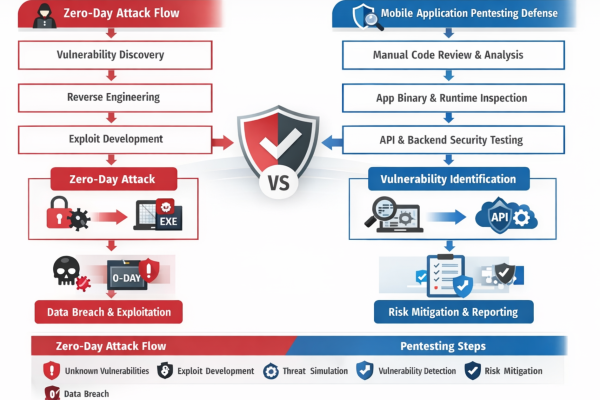
Mobile application penetration testing is a structured security assessment that evaluates Android and iOS applications for vulnerabilities across the client app, backend APIs, and communication channels. Unlike automated scans, professional Mobile Application Pentesting Services combine manual testing, reverse engineering, and real-world attack simulations.
Pentesting focuses on how attackers think, not just how controls are documented. It identifies flaws that compliance audits often miss and provides actionable remediation guidance.
Core components of mobile app pentesting include:
- Static analysis of application binaries
- Dynamic testing of runtime behavior
- API and backend security testing
- Authentication and session management analysis
- Data storage and encryption validation
- Business logic and authorization testing
Understanding PCI DSS Requirements for Mobile Applications
PCI DSS applies to any mobile application that stores, processes, or transmits cardholder data. Mobile apps used for payments, subscriptions, wallets, or in-app purchases fall directly within PCI scope.
While PCI DSS outlines high-level security requirements, it does not guarantee that a mobile app is resilient to attacks such as reverse engineering, man-in-the-middle interception, or API abuse. This makes Mobile Application Pentesting Services essential for PCI compliance.
How Mobile App Pentesting Supports PCI DSS
Mobile app pentesting validates that PCI DSS security requirements are enforced in real-world conditions. It ensures that encryption, authentication, and secure coding practices actually protect cardholder data.
Pentesting teams attempt to extract sensitive data from the app, intercept network traffic, bypass security controls, and exploit insecure APIs—exactly how real attackers operate.
PCI DSS areas strengthened by Mobile Application Pentesting Services:
- Verification of secure storage and handling of cardholder data
- Validation of TLS encryption and certificate pinning
- Detection of hardcoded credentials, keys, and secrets
- Identification of insecure third-party payment SDKs
- Testing for tampering, reverse engineering, and runtime manipulation
By uncovering these weaknesses, organizations can demonstrate due diligence and reduce the risk of PCI-related breaches and penalties.
HIPAA Compliance Challenges in Mobile Applications
Healthcare mobile applications process electronic Protected Health Information (ePHI), making them a high-value target for attackers. HIPAA requires organizations to protect confidentiality, integrity, and availability of health data—but mobile environments introduce unique challenges.
Mobile apps often store sensitive data locally, sync with cloud systems, and rely on APIs for real-time access. If not tested properly, these components can expose ePHI to unauthorized users.
Mobile Application Pentesting Services help healthcare organizations validate HIPAA Security Rule safeguards through practical security testing.
How Pentesting Aligns with HIPAA Requirements
Pentesting evaluates whether technical safeguards required by HIPAA are effectively implemented. It identifies weaknesses that could lead to unauthorized access, data leakage, or integrity violations.
Security testers simulate scenarios such as stolen devices, compromised user accounts, and malicious insiders to ensure controls remain effective under stress.
HIPAA security areas validated through mobile app pentesting:
- Access control enforcement and role-based permissions
- Secure authentication and session handling
- Protection of ePHI stored on devices
- Prevention of data leakage via logs, caches, and screenshots
- Secure transmission of health data over networks
By addressing these risks, organizations strengthen their HIPAA compliance posture and reduce exposure to regulatory enforcement actions.
GDPR and Mobile Application Data Protection
GDPR applies to any organization that processes personal data of EU residents, regardless of location. Mobile apps frequently collect personal data such as names, contact details, location data, behavioral data, and device identifiers.
GDPR emphasizes principles such as privacy by design, data minimization, and security of processing. However, implementing these principles in mobile apps requires continuous validation, not one-time configuration.
Mobile Application Pentesting Services provide practical assurance that GDPR security expectations are met at the application level.
How Mobile App Pentesting Supports GDPR Compliance
Pentesting validates whether personal data is adequately protected throughout the mobile app lifecycle. It tests for unauthorized access, excessive data exposure, and insecure integrations that violate GDPR principles.
Security assessments also focus on third-party SDKs and analytics tools, which are common sources of unintentional data leakage.
GDPR-aligned benefits of Mobile Application Pentesting Services:
- Validation of privacy-by-design implementation
- Detection of insecure personal data storage
- Identification of excessive or unnecessary data collection
- Assessment of encryption and access controls
- Reduction of breach notification risks under GDPR Article 33
By proactively identifying weaknesses, organizations can demonstrate accountability and compliance readiness.
How Mobile App Pentesting Addresses Common Compliance Gaps
Many compliance failures stem from gaps between policy and implementation. Mobile Application Pentesting Services expose these gaps before attackers or auditors do.
Pentesting identifies vulnerabilities that static audits cannot detect, such as logic flaws, insecure API workflows, and mobile-specific weaknesses.
Common compliance gaps uncovered through pentesting:
- APIs exposing sensitive data without proper authorization
- Broken authentication flows
- Insecure session tokens
- Weak encryption implementations
- Misconfigured backend services
- Insecure third-party libraries
Addressing these issues strengthens security across PCI DSS, HIPAA, and GDPR simultaneously.
Audit Readiness and Evidence Through Pentesting Reports
Regulators and auditors increasingly expect organizations to provide evidence of ongoing risk assessments. Mobile Application Pentesting Services produce detailed reports that support audit and compliance requirements.
These reports demonstrate that organizations actively test and remediate security weaknesses rather than relying on theoretical controls.
Compliance benefits of pentesting documentation:
- Clear mapping of vulnerabilities to regulatory requirements
- Proof of due diligence and risk management
- Actionable remediation recommendations
- Support for internal security governance
- Improved communication with auditors and stakeholders
Pentesting reports become a critical compliance artifact rather than just a technical document.
Continuous Mobile App Pentesting for Ongoing Compliance
Modern mobile applications evolve rapidly. New features, SDK updates, API changes, and OS upgrades introduce new risks. A single penetration test is no longer sufficient to maintain compliance.
Continuous or periodic Mobile Application Pentesting Services help organizations maintain security and compliance over time.
Reasons continuous pentesting matters for compliance:
- Frequent app updates introduce new vulnerabilities
- Regulations expect ongoing risk management
- Threats evolve faster than audit cycles
- Third-party integrations change regularly
- Cloud backend configurations shift frequently
By embedding pentesting into development and release cycles, organizations maintain compliance while supporting agile delivery.
Business Benefits Beyond Compliance
While compliance is a key driver, Mobile Application Pentesting Services deliver broader business value. Secure mobile apps build trust, reduce breach costs, and protect brand reputation.
Organizations that proactively test their mobile apps gain a competitive advantage in regulated industries.
Business advantages of mobile app pentesting:
- Reduced likelihood of costly data breaches
- Improved customer trust and retention
- Stronger security posture across platforms
- Faster audit and certification processes
- Lower long-term remediation costs
Compliance becomes a byproduct of strong security rather than a reactive obligation.
Conclusion
PCI DSS, HIPAA, and GDPR establish critical frameworks for protecting sensitive data, but compliance alone does not guarantee security. Mobile applications operate in complex, high-risk environments where real-world attacks frequently bypass poorly implemented controls.
Mobile Application Pentesting Services play a crucial role in validating compliance, uncovering hidden vulnerabilities, and ensuring that security measures function as intended. By simulating attacker behavior, pentesting bridges the gap between regulatory requirements and actual protection.
For organizations handling payment data, healthcare information, or personal data, mobile app pentesting is no longer optional—it is an essential compliance enabler and a cornerstone of modern cybersecurity strategy.

Author